You've been eating your cutting board.

Look at your plastic board and you'll see the cuts. Every one of them is from your knife, and every one sheds tiny bits of plastic right into your food. Those same cuts trap germs your sponge can never reach.
So @notorious_foodie built a better one. Hard wood, cut end-up, so your knife slips in and the wood closes back around it. It stays flat, stays clean and keeps your knife sharp - and it comes with the Damascus knife it was built for.
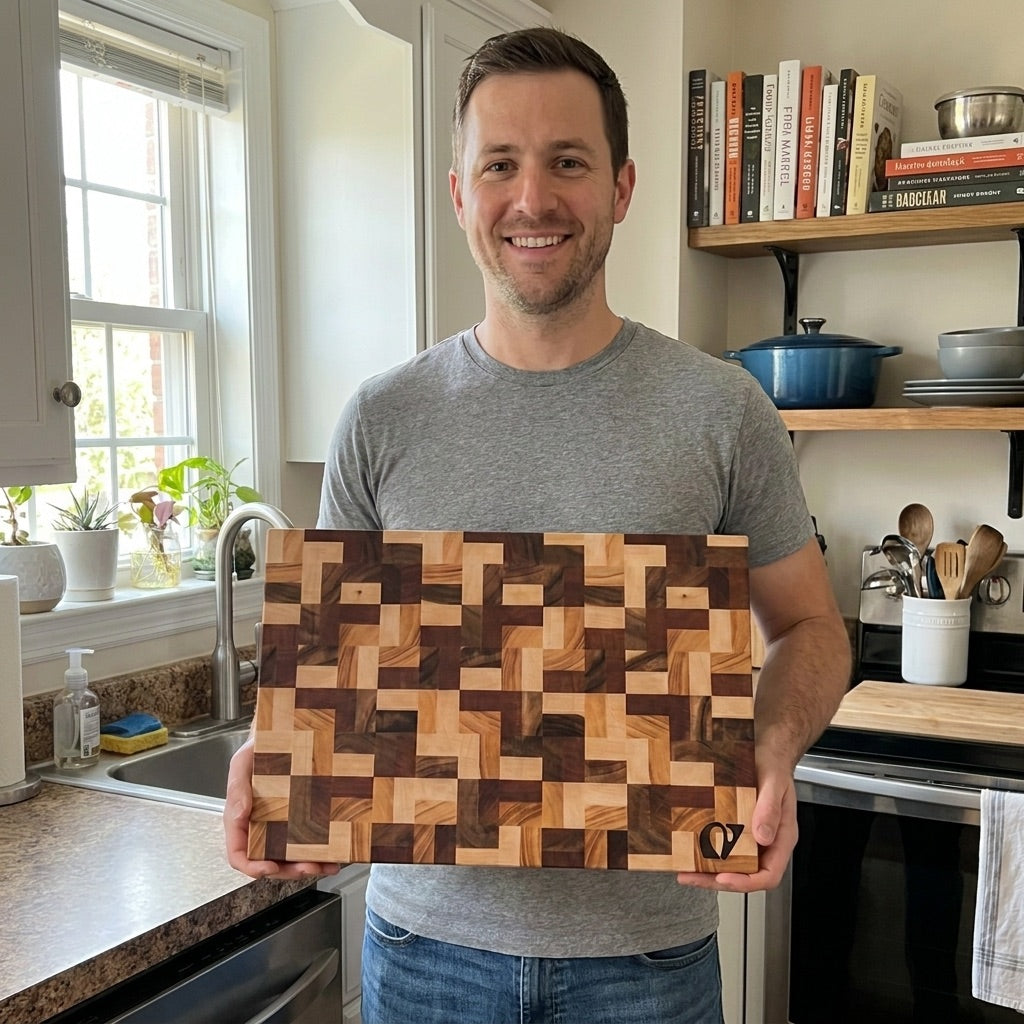
"I threw out every plastic board the week this came. I am not going back."
David R. ✓ Verified buyer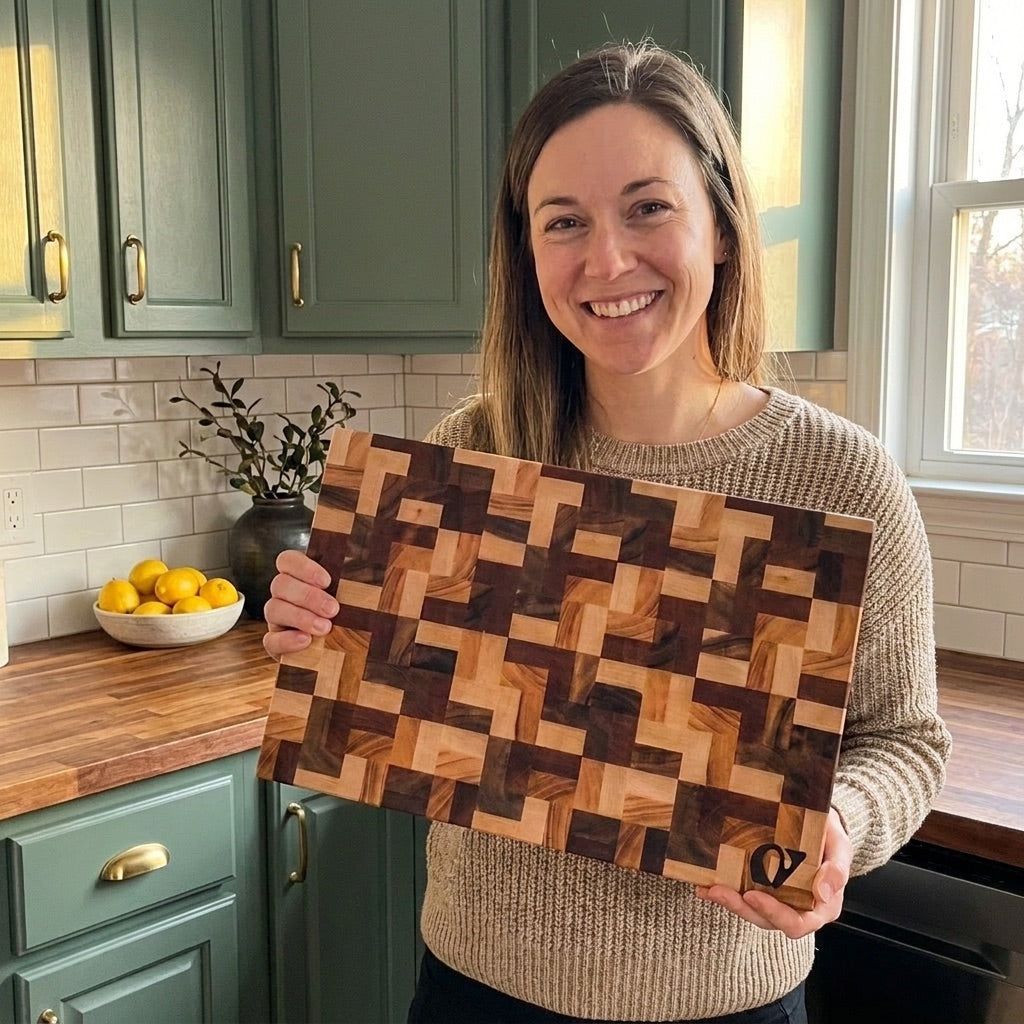
"Two years in. Still dead flat. My knives have never stayed this sharp."
Priya S. ✓ Verified buyer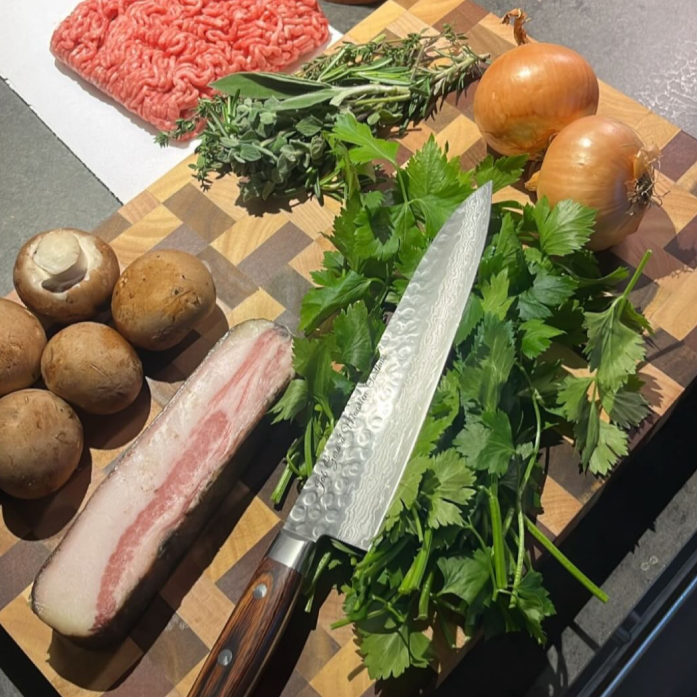
"Guests always ask where I got it. They thought it was a decoration. Then I told them I prep on it every day."
Marcus L. ✓ Verified buyer
Built by the cook 20M+ people watch every day
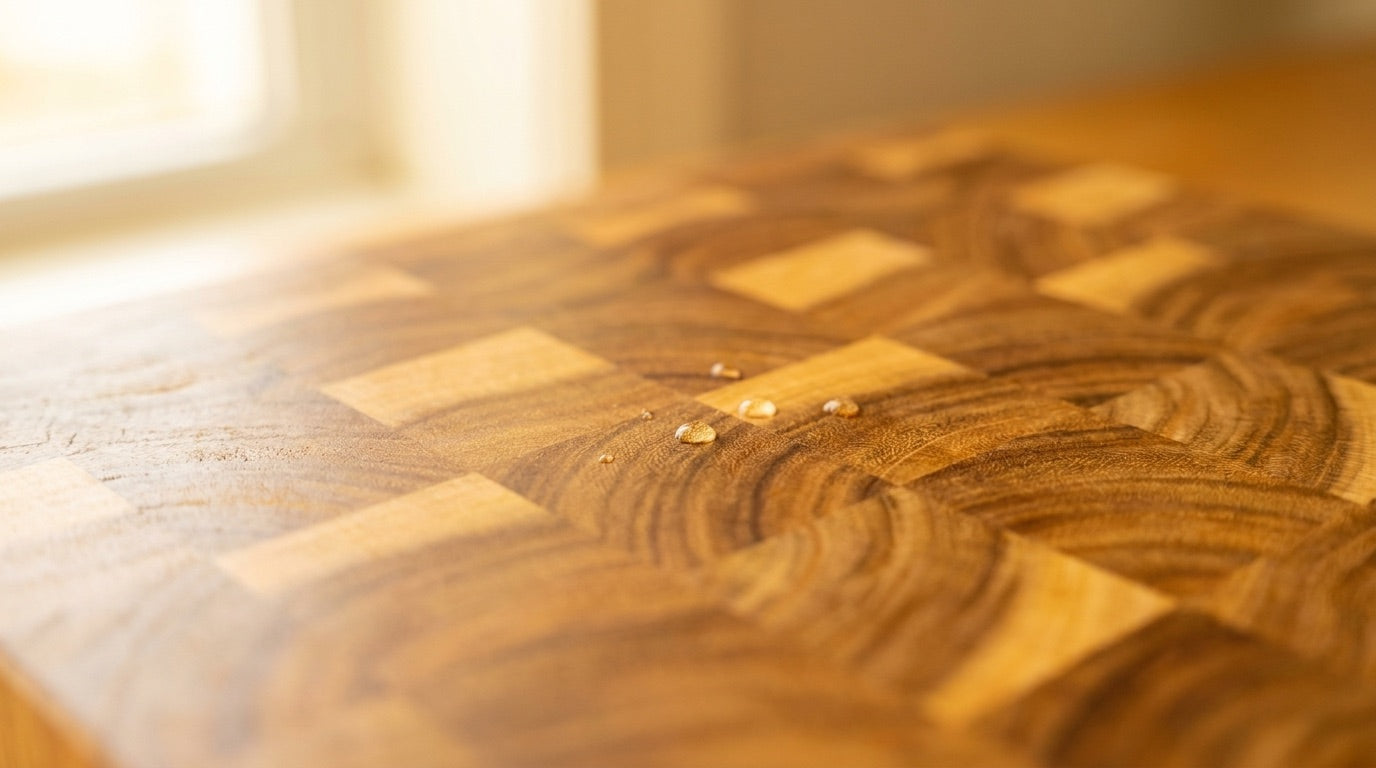
Closed-grain woods: juice stays on top and washes right off
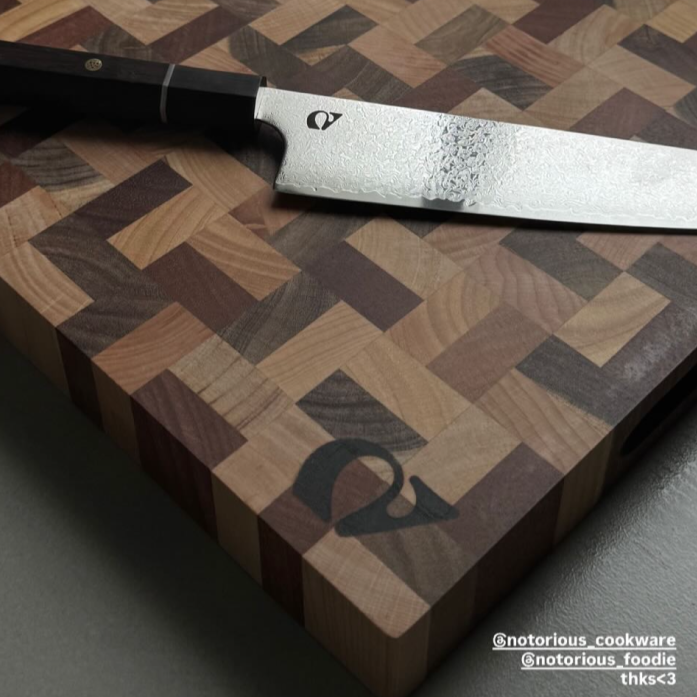
Hard wood, cut end-up, so it sheds nothing and hides nothing

Kind to your knife: the edge lands between the fibers, not against them
It's not you. It's your board.
Six signs the tool you use most is working against you:
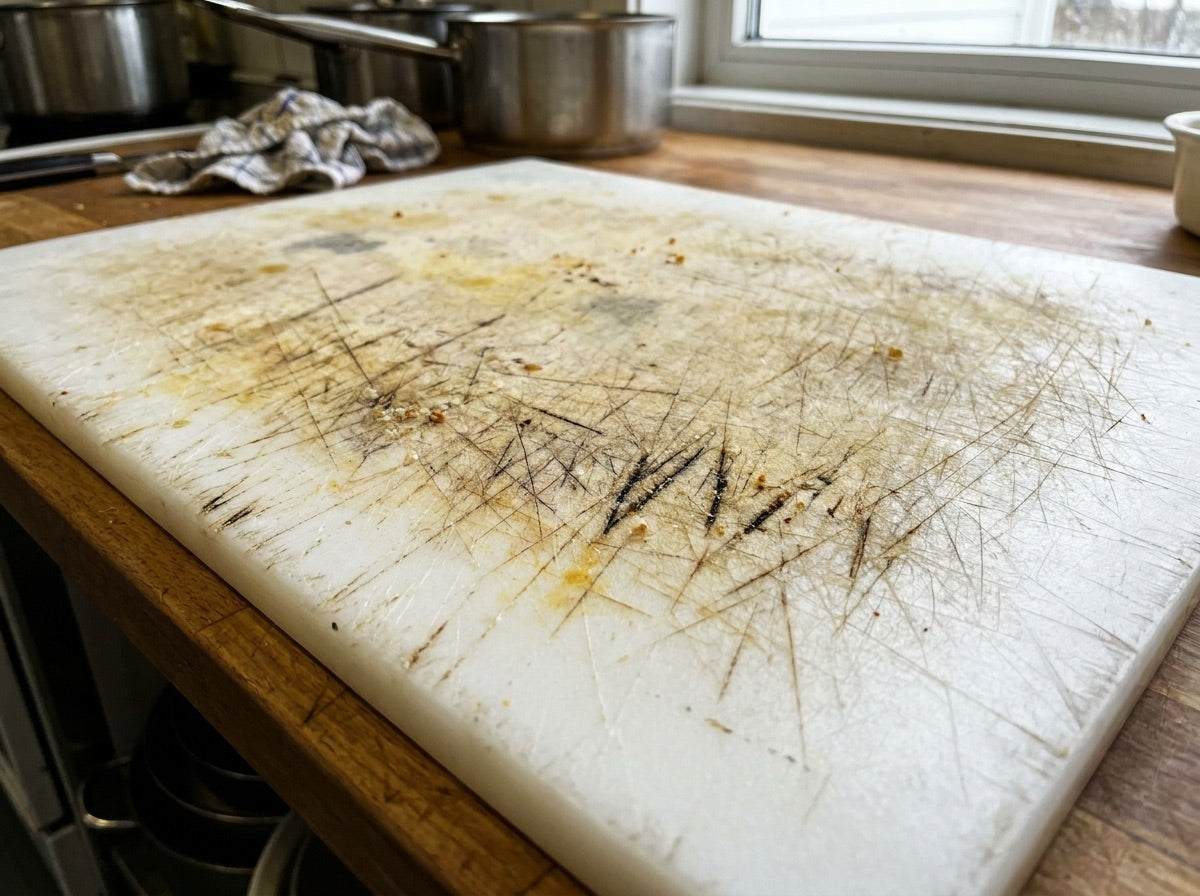
The cut-up plastic board
Every scar is a groove your sponge can't reach - and a bit of plastic in your food.
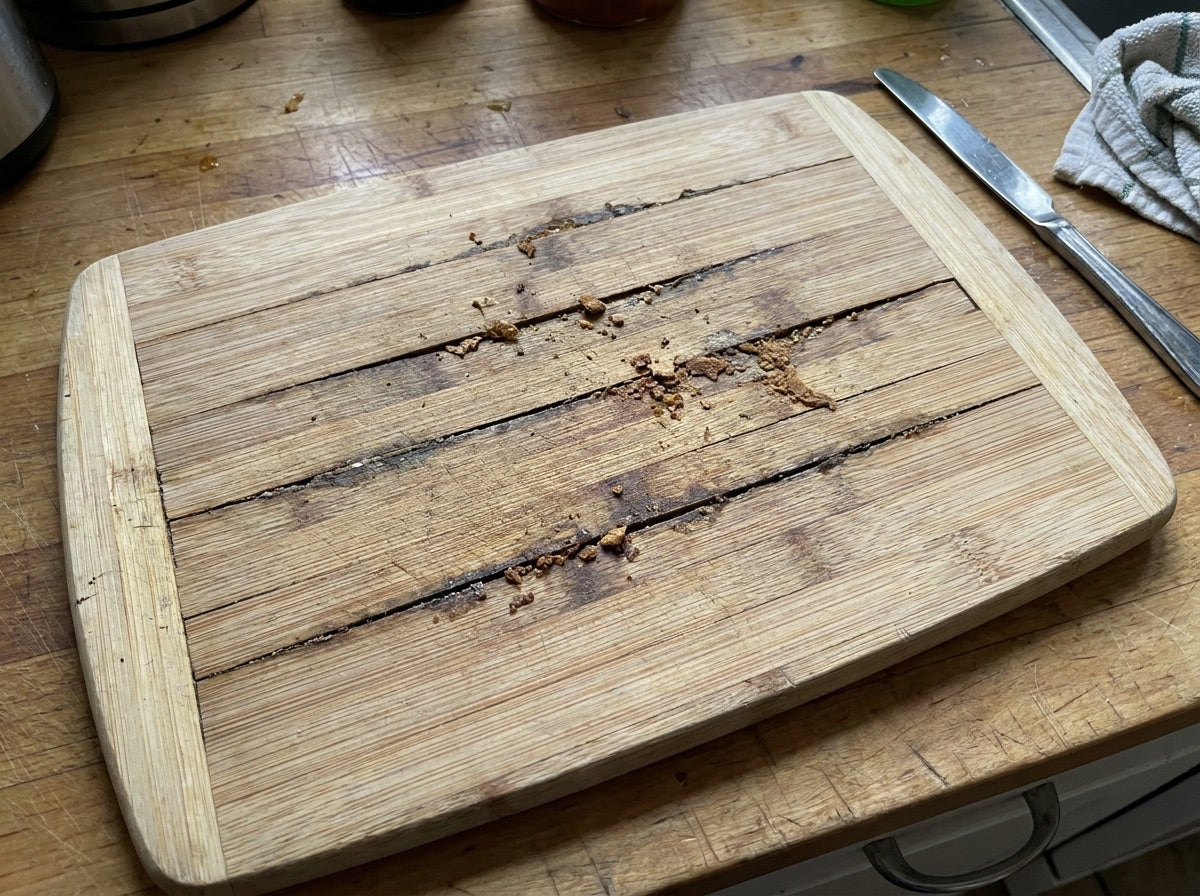
The bamboo that split
It's glued strips. They come apart at the seams. Gunk lives in the gaps.
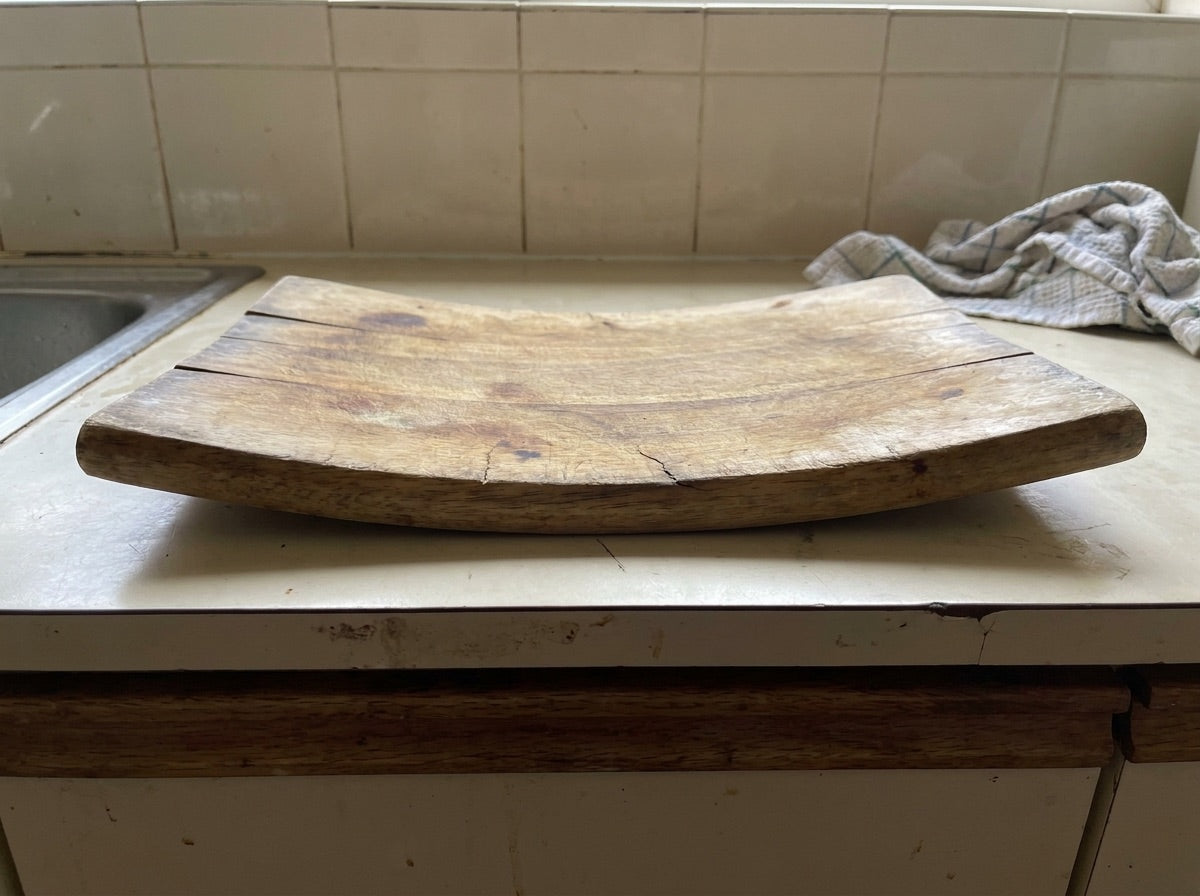
The "nice" board that warped
One trip through the dishwasher. Now it's curled like a taco. Money gone.
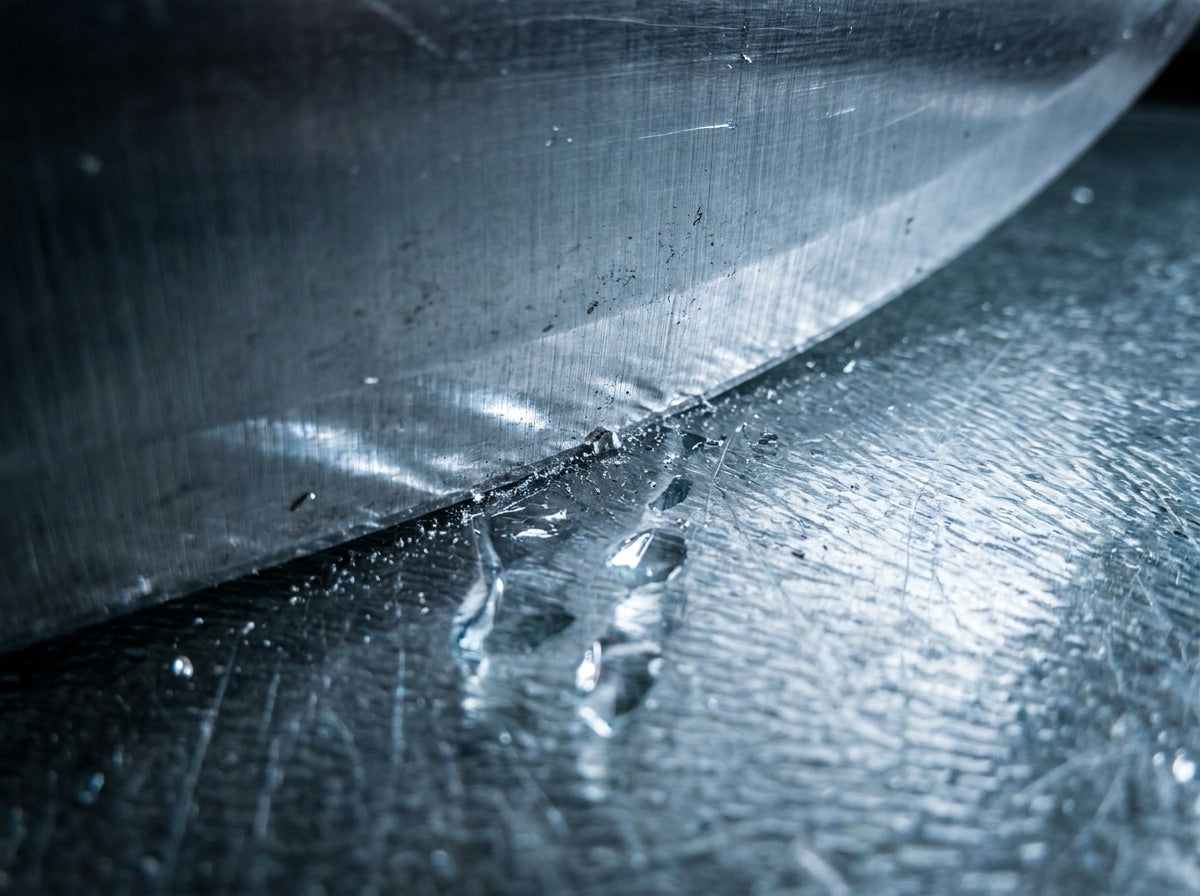
Knives that go dull fast
Glass, bamboo and rock-hard boards grind your edge down every stroke.
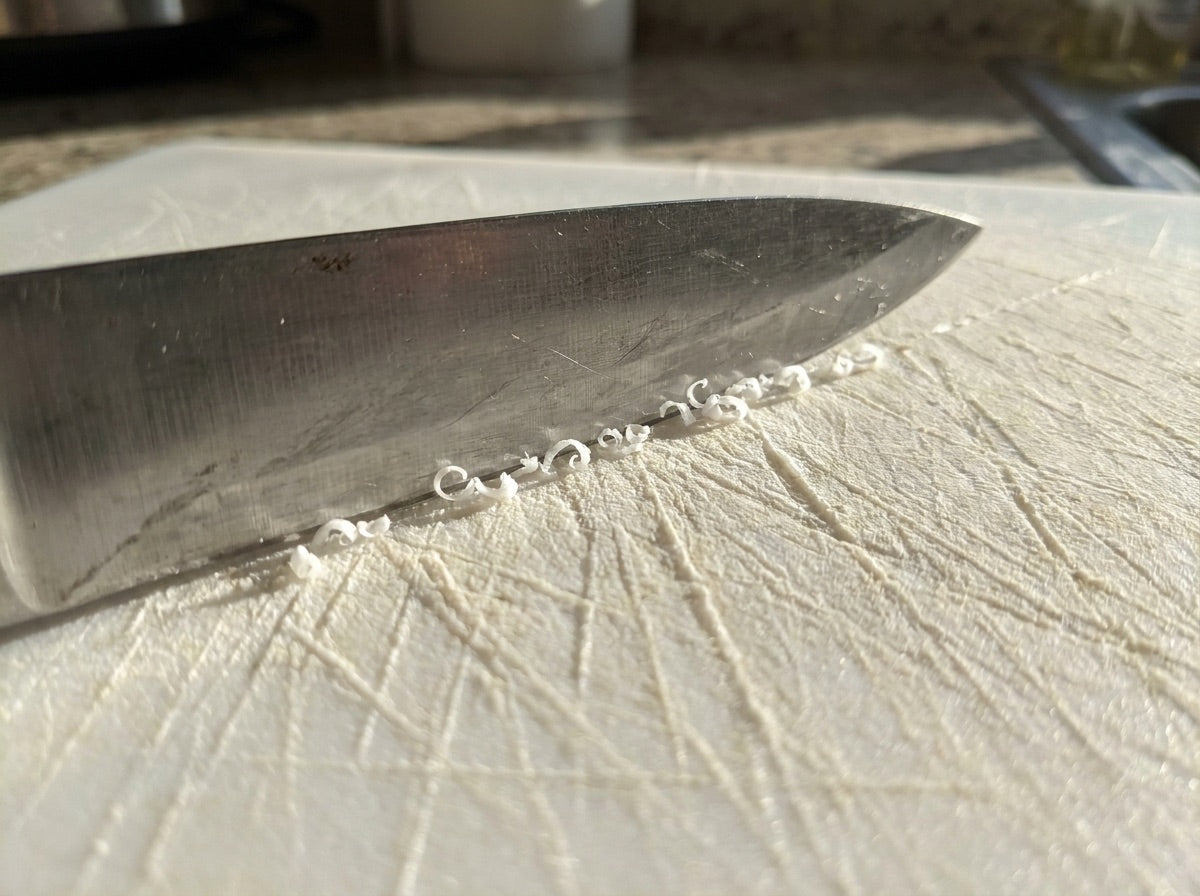
The bits you can't see
Chop on plastic and it sheds tiny bits right into what you're cooking.
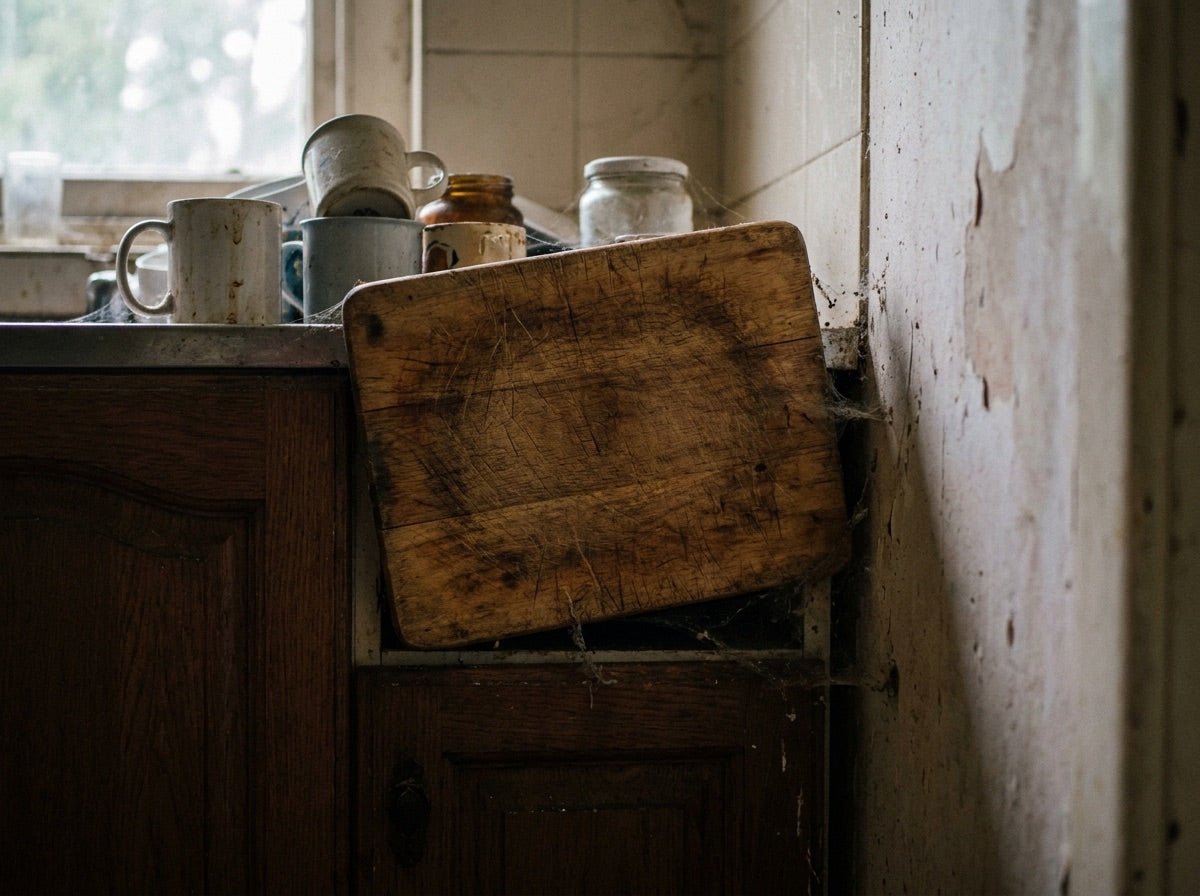
The board you hide
Too ugly to leave out. So you hide it. Then you buy another. Again and again.
They told you plastic was the upgrade.
It was the downgrade.
A generation ago, kitchens were wood, cast iron and steel. Then someone decided plastic was "more modern." The pitch was simple: it's nonporous, it's dishwasher-safe, it's clean.
It was cheaper to make. That was the real reason.

So they sold you a "food-safe" surface that gouges in a week, hides germs in every cut and quietly sheds plastic into dinner, and told you it was the safe choice. Your grandmother's wood board was closer to right the whole time.
The science just caught up. Here's what it found.
The one thing nobody told you about cutting boards.
Every cut sheds plastic into your food.
In 2023, scientists at watched what a knife does to plastic. Each cut opens a tiny groove, and each groove sheds bits of plastic into your food, so much that they found a single board can shed a stunning amount over its life. That's a lot of plastic across a lot of meals.
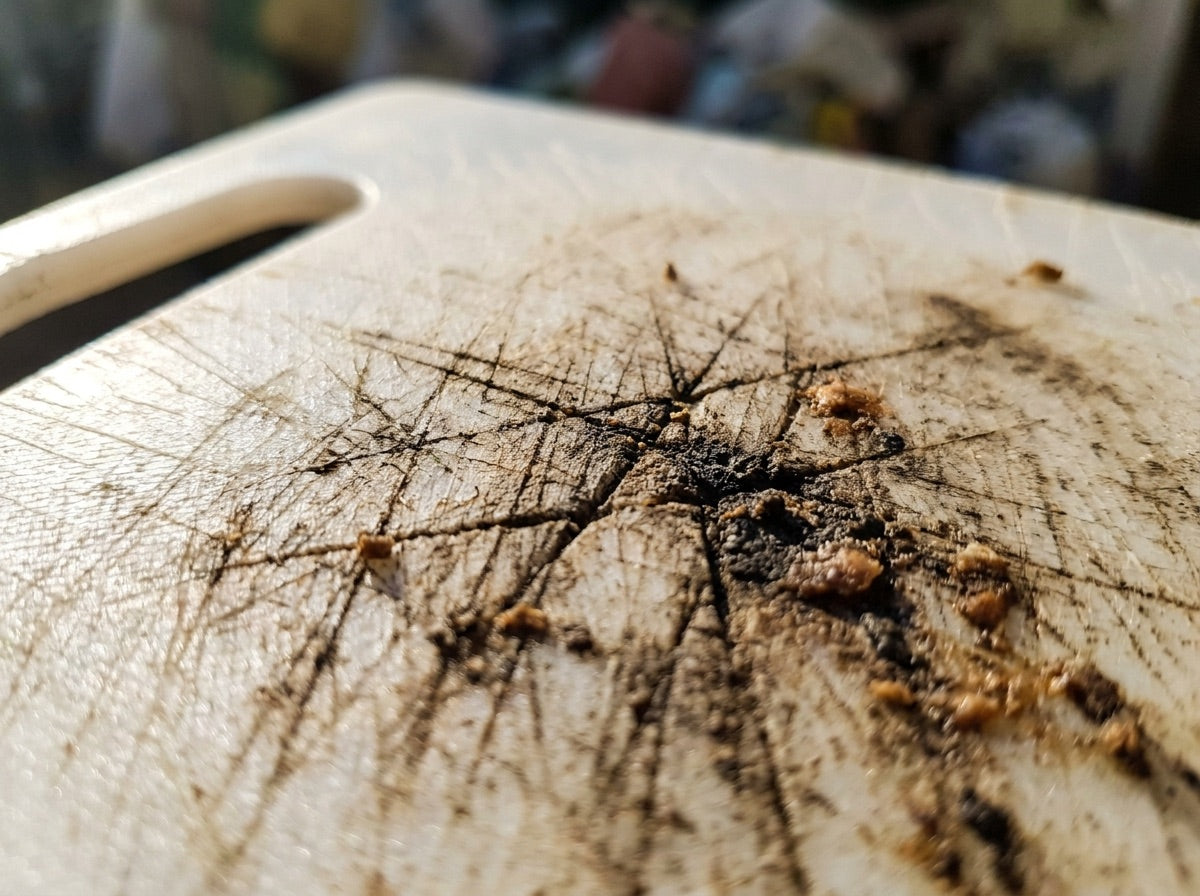
The grooves are where germs live.
Back in the 1990s, food scientists at put germs on boards. On plastic, the germs lived in the cuts and even grew. On wood, they got pulled in and died.
So the problem was never how you clean. It's what you cut on.
The fix is a spec, not a vibe.
Not all wood works. Too soft and it gouges like plastic. Too hard and it wrecks your knife. Too open-grained and it drinks up juice and warps. Most boards sold online are the wrong kind.
There's a sweet spot - hard enough that a knife won't scar it, kind enough that it won't dull your blade, and closed-grain, so juice stays on top where you wash it off. We build only in that spot.
Then there's how it's built. This is an end-grain board. The wood fibers stand straight up, like a tight bundle of straws. Where a flat plank fights your knife, this one welcomes it: the fibers open, let the blade slip in, then close back around the cut. Butchers have used blocks like this for a hundred years.
Right wood. Right grain. Cut end-up.
It's a spec, not a vibe.
Four woods. One board.
Each one earns its place.
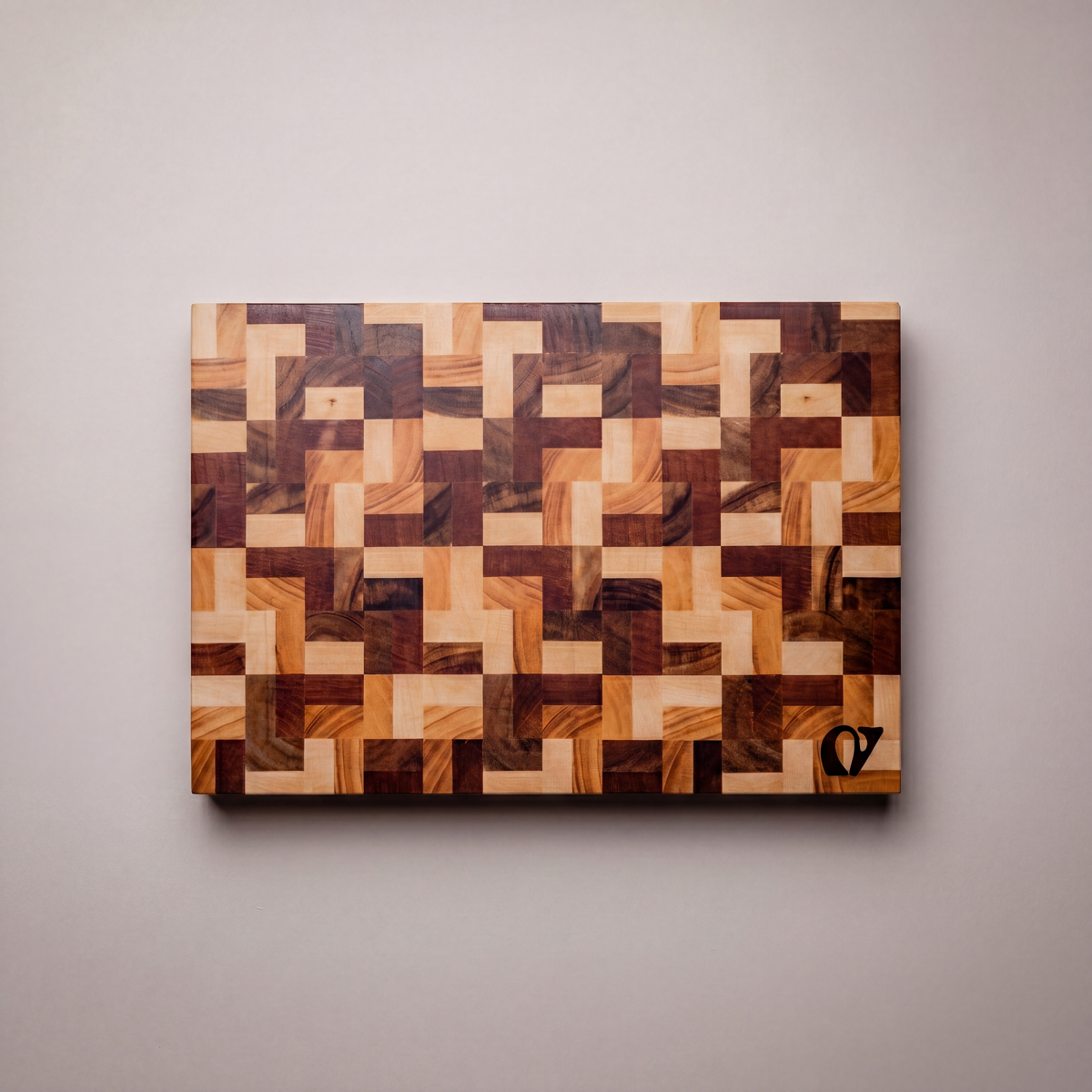
The Chopping Board isn't one wood - it's four, cut end-up in a checkerboard. That's not for looks: each one does a job the others can't.
AcaciaThe wood that oils itself.
So full of its own oil that water beads and rolls off before it can warp the board. Hard and dense, so your knife leaves no scar. It's why the board still looks new after years of wet-and-dry.
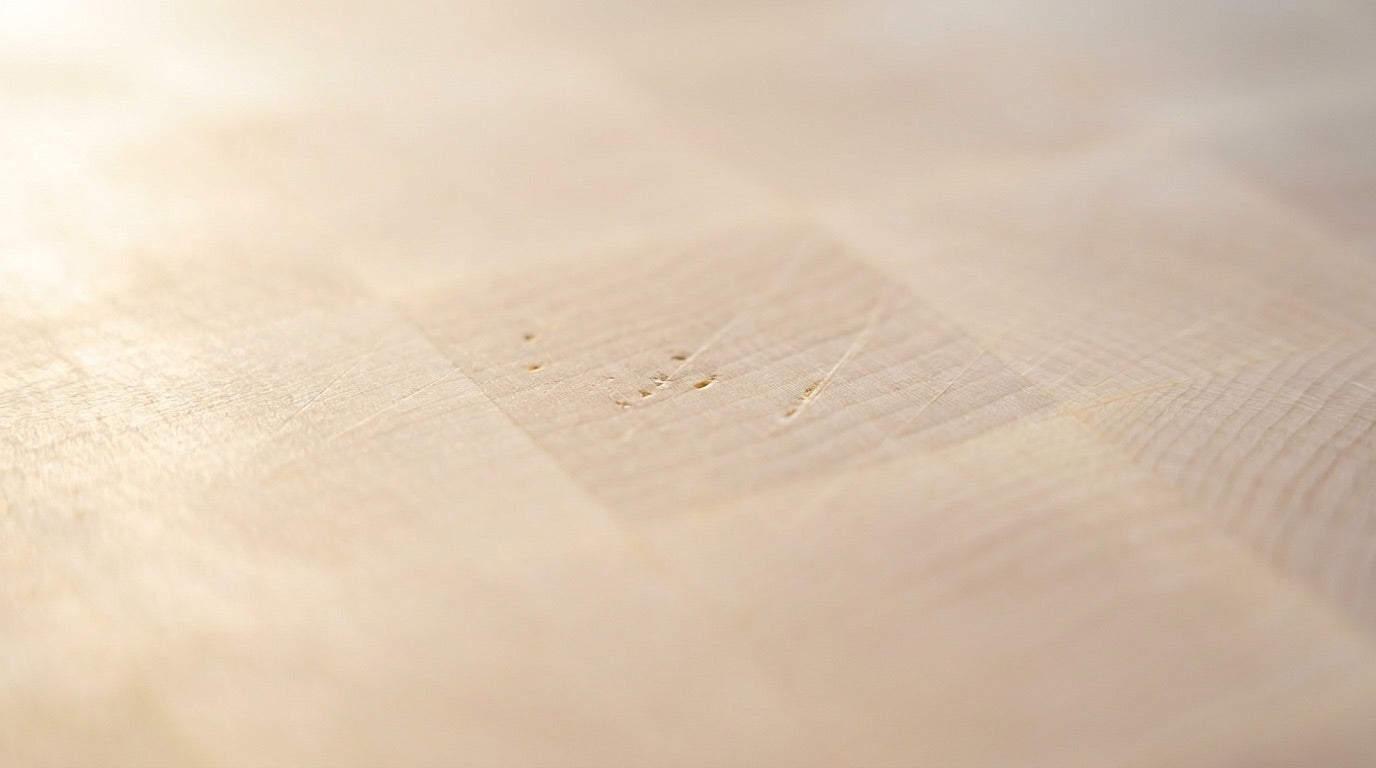
MapleThe wood butchers bet their business on.
Tight, closed grain keeps juice and germs up on top, where they wash away. It's the surface professional butcher blocks are built from. Instant proof it works.
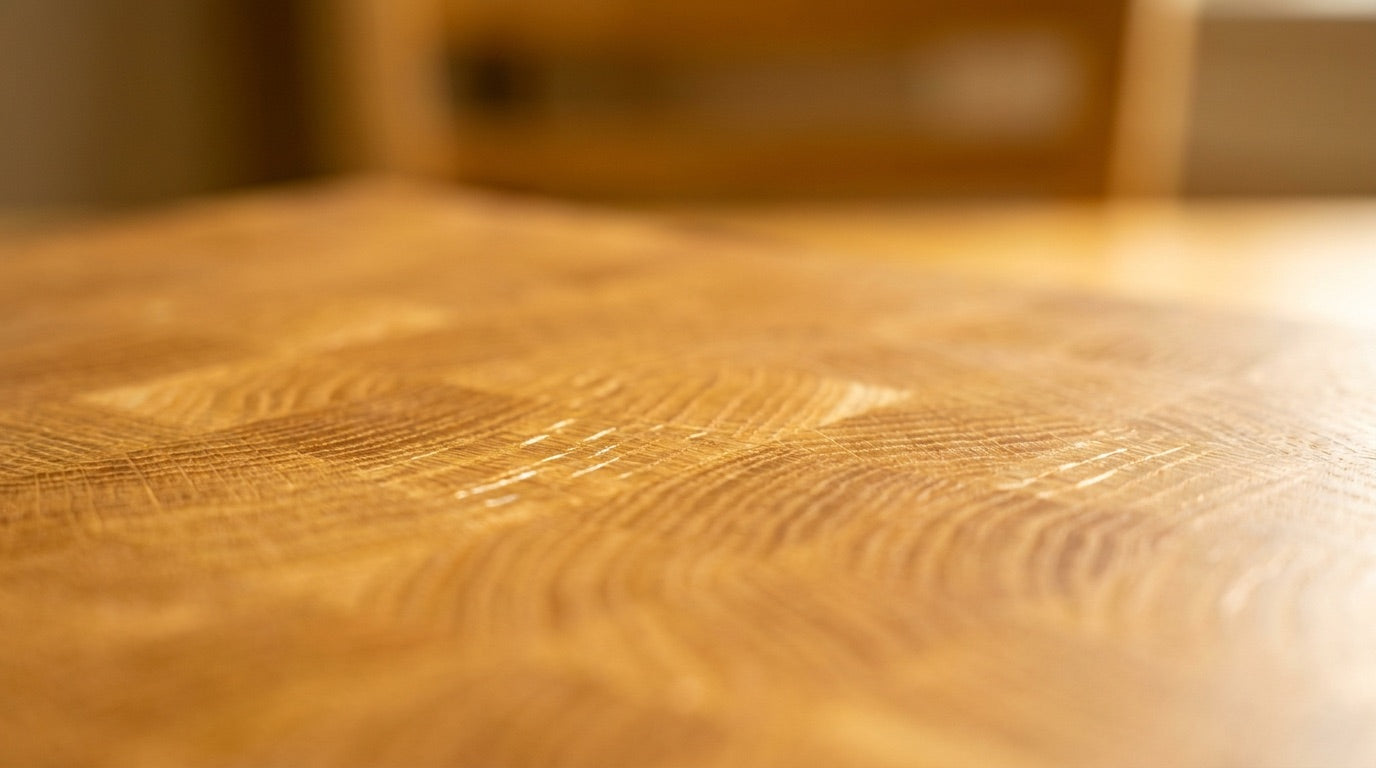
White OakOne word separates a lifetime board from firewood: white.
Its pores are sealed by nature, so it fights off water and glows a warm honey color. Red oak soaks up liquid and rots a board from the inside. Ask any other brand which oak they use. Most can't answer.
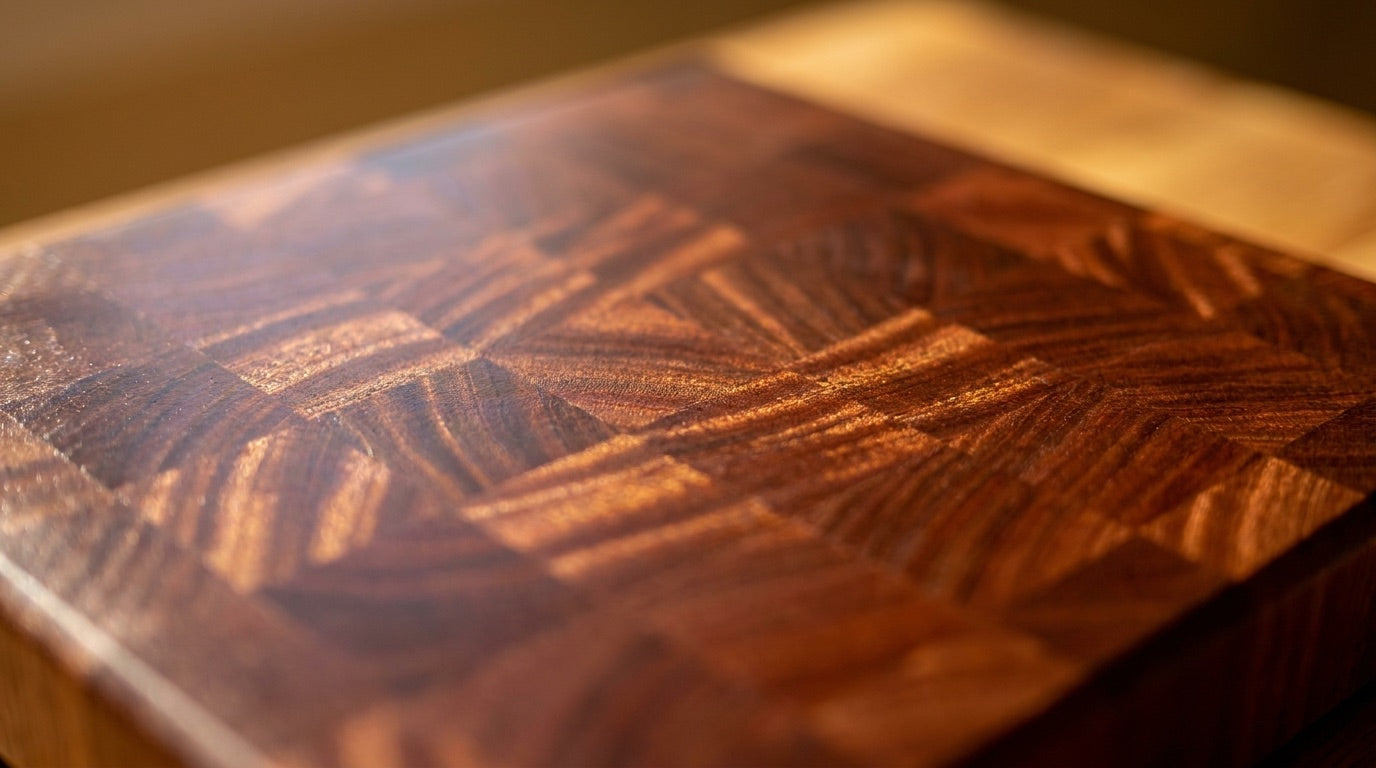
SapeleThe sustainable mahogany most brands can't source.
Dense, dead-stable, with a deep ribbon grain that makes the whole board glow like fine furniture - without touching a single endangered mahogany tree.
The board keeps your knife sharp. The knife makes the board sing.
A good knife needs a surface that won't kill its edge - and that's the whole point of this pair. Those straight-up end-grain fibers soak up the blade instead of grinding against it, so the same board that outlasts every plastic one you've owned also keeps your knife sharp for months, not weeks.
And the knife earns its spot:
- Forged from 67 layers of Damascus steel
- Japanese VG-10 steel core - the steel real kitchens reach for
- Contoured ebony wood handle
- 8.2-inch blade, just 160 grams
- Sharp enough to glide through a ripe tomato
Alone, the board is the best surface you'll ever cut on. Together, the two protect each other. And today the pair is 25% off.
Build my Chef's Bundle & Save 25%
He chops on camera for
20,000,132 people.
So he built the board he could never buy.
The problem was on his counter every day. Years of prep, on camera, in 4K, on boards that gouged, warped, split or dulled his knives. It started as a need.
He set the rules himself. He dug into the wood science. Hardness. Closed grain versus open. Why white oak and never red. If a wood didn't pass, it was out.
He said no to dozens of tries. He tested each in a real kitchen and kept going until it was right - not until it was cheap.
This is his, start to finish. Not a licensing deal. Not a paid post. He made it, uses it every day, and his name is on every board that leaves the shop.
"I couldn't find a board good enough. So I made one. It's the board I trust my knives, my food, and my name on."
- @notorious_foodie
Day one. Month one. Year ten.
You feel it. The board stays put, the knife lands soft, and nothing slides or clacks.
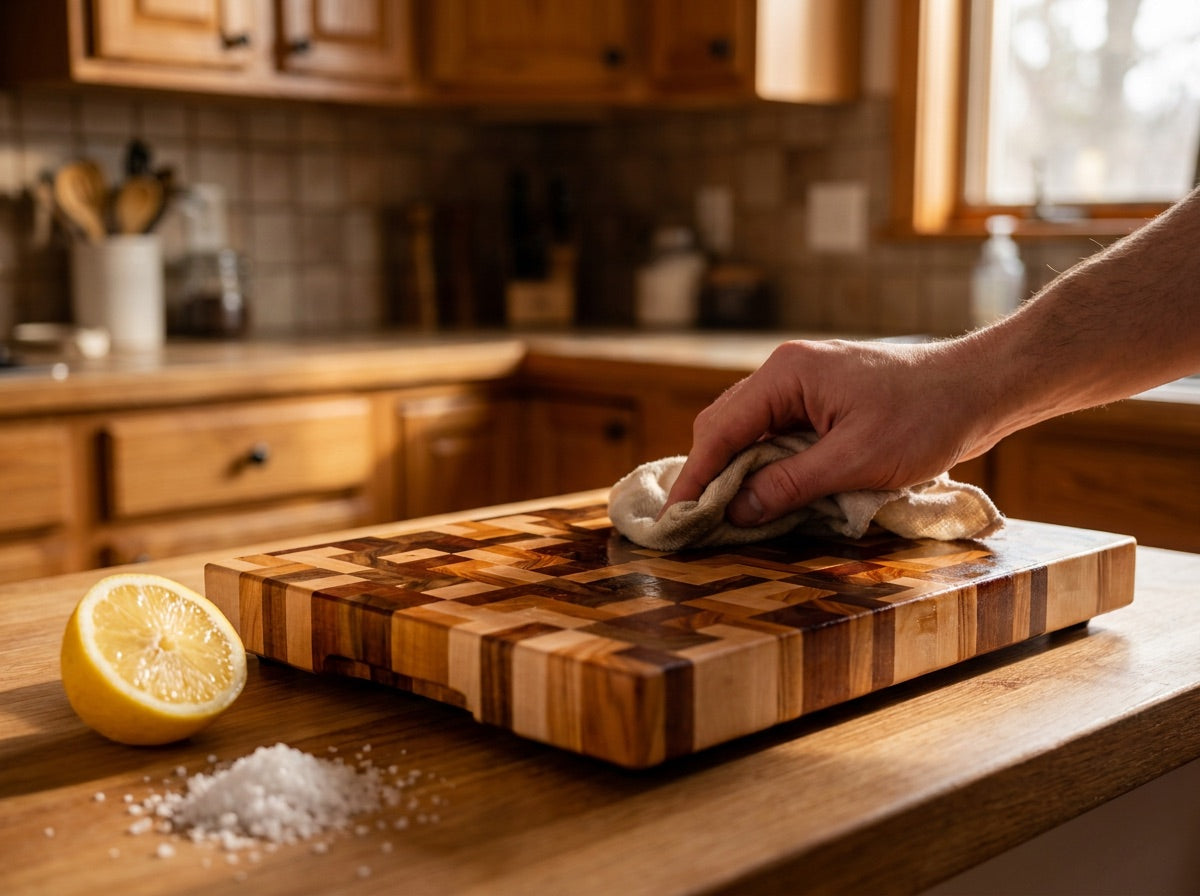
A two-minute oiling, one time. That's the entire maintenance everyone warned you about.

It gets a glow, not gouges. Those plastic boards you kept rebuying? You've lost count of how many this one outlived.
"One of these is shedding into dinner. The other becomes a family heirloom."
| Notorious | Plastic | Cheap import wood | Bamboo | Glass | |
|---|---|---|---|---|---|
| Doesn't shed plastic into food | ✓ | ✗ | ○ | ○ | ✓ |
| Doesn't trap germs in knife cuts | ✓ | ✗ | ✗ | ✗ | ✓ |
| Kind to your knife's edge | ✓ | ○ | ○ | ✗ | ✗ |
| Won't warp or split | ✓ | ○ | ✗ | ✗ | ✓ |
| Nice enough to leave out | ✓ | ✗ | ○ | ○ | ○ |
| How long it lasts | Decades | Months | <1 yr | 1-2 yrs | Years |
Clean it in 60 seconds. Keep it for decades.
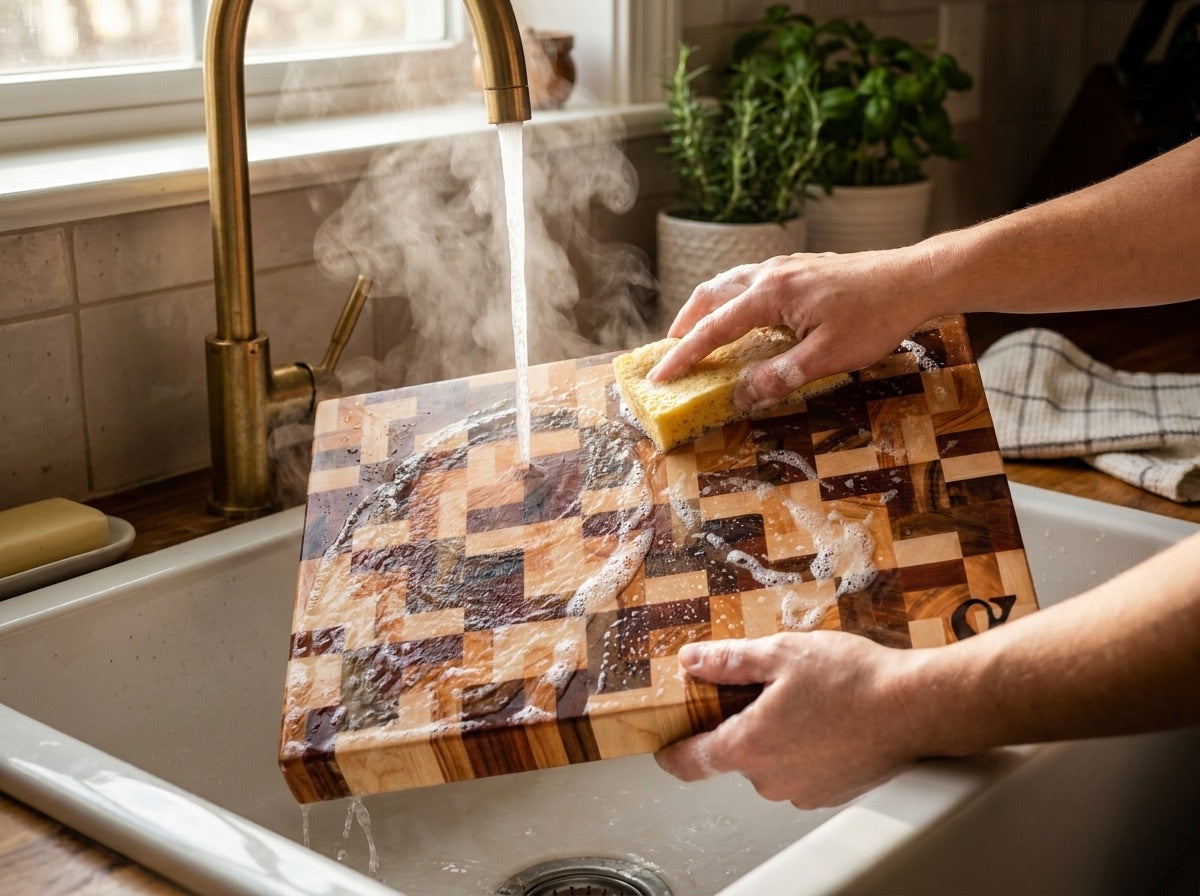
Wash
Hot water, dish soap and a quick scrub - the same for both the board and the knife. No dishwasher, no long soak.
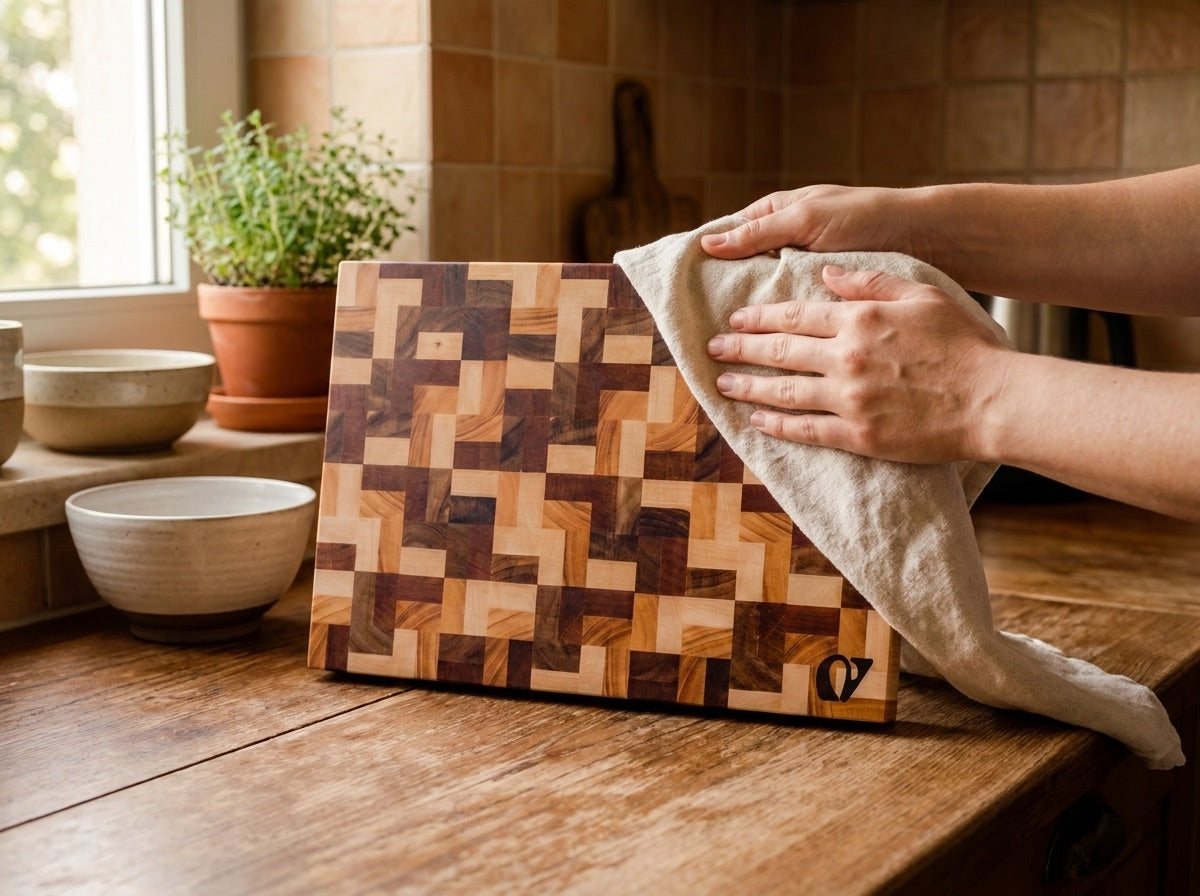
Dry
Towel it off, then stand the board on its edge so air hits both sides. Dry the knife right away.
Reset
After raw meat or fish, wipe with white vinegar, or scrub with coarse salt and half a lemon. Every month or two, rub in a little food-safe mineral oil. Two minutes, done.
Your satisfaction is the whole point.
Cook on it daily for three months. If it isn't the best tool in your kitchen, send it back and we refund every dollar. No forms to fight, no restocking fee, no hard feelings. The only way to lose is to keep eating off the old board.
Everything prep should feel like - in one bundle.
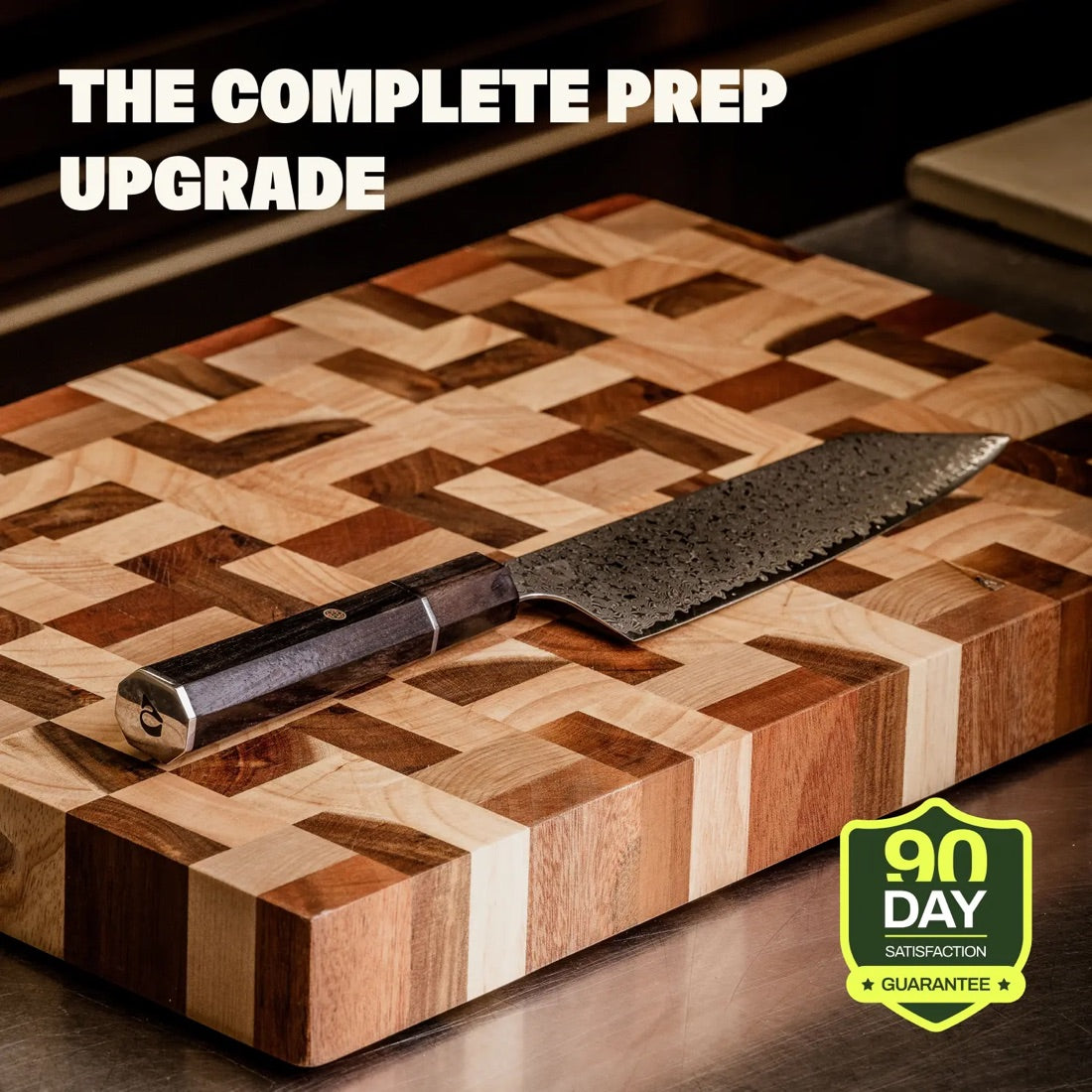
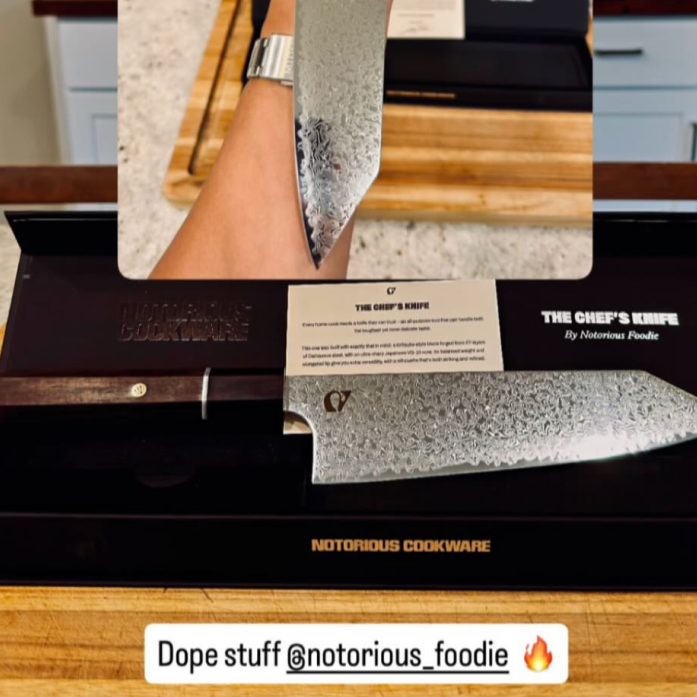 "I ordered the board-and-knife set and was so impressed I've made it my default gift for weddings and housewarmings ever since. People LOVE IT!"
Join 500,000+ kitchens that made the switch.
★★★★★"Best knife I've ever owned. The balance is unreal - feels like an extension of my hand."
- Marcus L., NYC ✓ Verified
★★★★★"My friends thought it was a decoration. I told them I use it every day. Now they own one too."
- Priya S., Austin ✓ Verified
★★★★★"Two years in. Still dead flat. My knives have never stayed this sharp for this long."
- David R., Chicago ✓ Verified
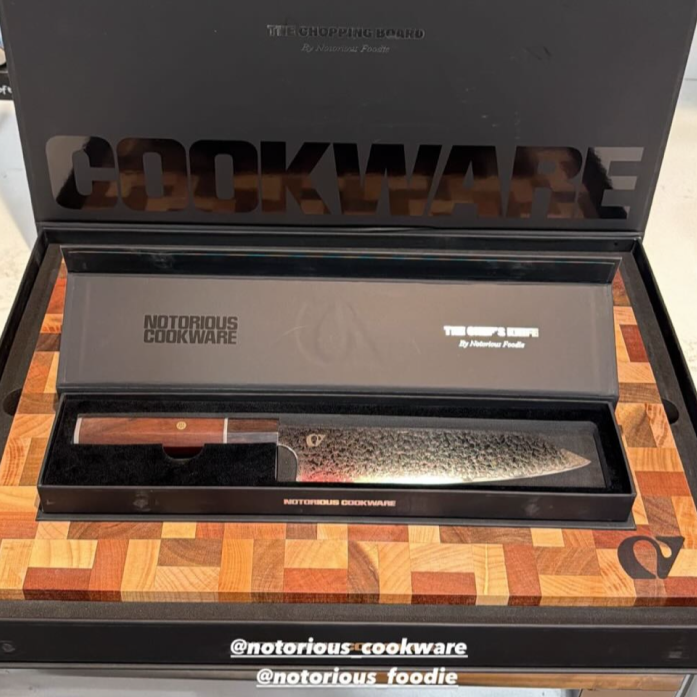
★★★★★"Threw out every plastic board in my kitchen the week this came. I'm not going back."
- Sofia G., Miami ✓ Verified
★★★★★"Bought it for my dad. He's a serious home cook and hard to impress. He wouldn't stop talking about it."
- Ethan M., Seattle ✓ Verified
★★★★★"I wanted to hate it because of the price. Then I used it. Worth every dollar."
- Julian T., Denver ✓ Verified
Everything people ask.
How do you clean the board so it doesn't hold germs?
Hot water and dish soap, towel dry, stand it on its edge. After raw meat or fish, wipe with white vinegar or scrub with coarse salt and half a lemon. No dishwasher, no soaking. And found germs die on wood, while on plastic they live in the cuts and grow.
Is it white oak or red oak?
White oak. Always. Its pores are sealed by nature, so it's closed-grain and fights off water. Red oak is open-grained and soaks up liquid. If a brand won't tell you which oak they use, that's your answer.
Will it dull my knives?
The opposite. The four woods sit in the range that's easy on a blade, and the end-grain surface lets the knife slip between the fibers instead of grinding across them.
Isn't wood a lot of work?
That reputation comes from the wrong woods. Oil-rich, closed-grain wood needs only a two-minute oiling every month or two.
Why not bamboo? Isn't it green?
Bamboo is glued grass. The strips split at the seams, you cut over the glue lines, and it's hard enough to chew up your edge. Our acacia grows nearly as fast - and it's a real, closed-grain hardwood.
How fast does it ship?
US orders arrive in 3 to 4 business days with tracking. Other countries, 7 to 14.
Can the knife ship to my country?
The board ships worldwide. The knife - and so the bundle - can't ship to the UAE, Canada, Switzerland or New Zealand. There, you can still get the board on its own.
What's the guarantee?
The 90-day home trial: cook on it daily for three months, and if it isn't the best tool in your kitchen, send it back for a full refund. And if anything arrives damaged or faulty, email contact@notoriouscookware.com within 14 days.
4.8/5 from 295 verified owners.
★★★★★ The Chef's Knife- Anonymous ✓ VerifiedNice balance, sharp and beautiful
★★★★★ The Chopping Board- Marci G ✓ VerifiedChopping board is beautiful!! Not too heavy and not thin. I’ve been enjoying using it daily.
★★★★★ The Chopping Board- Ryan Faye ✓ VerifiedIt’s just a great cutting board. Best I’ve ever owned.
★★★★★ The Chef's Knife- Ryan Faye ✓ VerifiedPerfect chefs knife. Favorite of my bunch by a long shot.
★★★★★ The Chef's Knife- Ali Craig ✓ VerifiedHorrible shipping
★★★★★ The Chef's Knife- Charles ✓ VerifiedI’ve used it pretty much every day since it arrived. Great knife for the price. Much better than you can find at most kitchen supply stores.
★★★★★ The Chopping Board- jason ✓ VerifiedFast delivery great product
★★★★★ The Chef's Knife- John Baker ✓ VerifiedSharpest knife I have ever owned. Love it!
★★★★★ The Chopping Board- Anonymous ✓ VerifiedThe board is beautiful and I love using it everyday. It is just as advertised.
★★★★★ The Chopping Board- Anonymous ✓ VerifiedLove it!
Showing the 10 most recent of 295 · all board reviews (150) · all knife reviews (145)
The tool you use most shouldn't be the one you throw away most.
One board: four woods, cut end-up, built to his standard by @notorious_foodie - plus the knife it was made to protect. Picked on the science, and built to outlast every plastic board you've ever tossed.
Cook on it for 90 days. If it's not the best tool in your kitchen, send it back. The only way to lose is to keep eating off the old one.
Shop the Chef's Bundle & Save 25%