You switched to a wood board. But is it the wrong wood?
There's a 30-second test that tells you whether the board on your counter is the kind that protects your food, or the kind that quietly works against it. Wine makers have known the difference for 200 years.
You already did the smart thing, because you saw the noise about plastic boards and switched to wood, and by now you've heard every wood pitch going, from bamboo and "handcrafted" to juice grooves and "premium hardwood."
So here's the part almost nobody mentions: wood is only the better surface if it's the right wood, and one of the most common woods sold for boards quietly fails the exact same way the plastic you threw out did.
It's red oak, and there's a good chance it's either on your counter right now or sitting in the store listing you're about to buy from.
The good news is you can find out in about 30 seconds, and once you've seen it you can't unsee it.
The 30-second test you can run on any board
Woodworkers have a simple way to tell the two oaks apart. Take a scrap of red oak, stand one end in a glass of soapy water, and blow through the other end.
Bubbles rise up through the wood. Air passes straight through it, end to end.
Now try it with white oak, and blow as hard as you like, because nothing happens: not one bubble.
That one test shows you everything: red oak is full of open pores that run through it like a bundle of tiny straws, while white oak's pores are sealed shut by nature, with little plugs called tyloses.
If air can pass through the wood, so can water. And juice. And whatever was in your raw chicken.

That's the whole game with a cutting board, because an open-pore wood drinks liquid in, and meat juice, fish water, onion and garlic all wick down into those straws, deep where your sponge will never reach.
Sound familiar? It's the same failure as plastic. A plastic board traps gunk in the knife cuts. A red oak board traps it in the pores. Either way you can't clean it out, and it sits there in the wood between meals.
The proof: you cannot build a barrel from red oak
Here's the fact that makes it undeniable. For centuries, coopers have made barrels and casks from white oak, and never from red, for one reason: pour wine into a red oak barrel and it leaks straight out through the wood. The liquid travels down those open pores and weeps through the staves. The barrel cannot hold it.
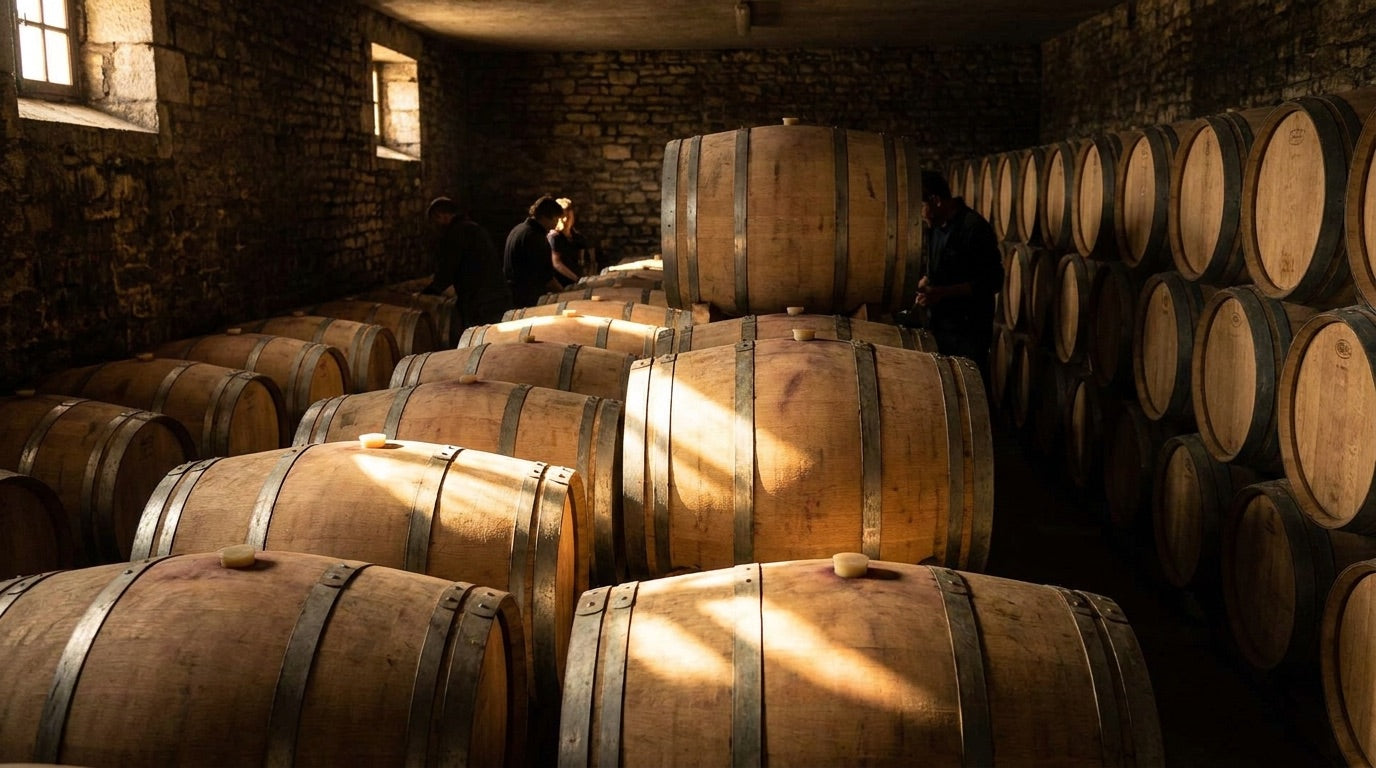
Now picture that same wood under your knife. A material so porous it can't hold wine in a barrel is the material some brands sell you to cut raw chicken on.
White oak is the opposite, because its pores are plugged by nature (woodworkers call these plugs tyloses), so it holds liquid in or keeps it out for years. It's the wood behind bourbon, wine and wooden ships, chosen every time water absolutely cannot get through, and any woodworking reference will tell you the same thing about red oak's open pores.

What that means for what you eat
A board that drinks liquid in doesn't just soak up water, it soaks up everything in the liquid, which is where it starts to touch your food.
Cut garlic and raw fish on Monday and the juices sink into the pores, so when you slice an apple on that same spot on Thursday it can pick up what's still living down in the wood, both the flavors and bacteria your sponge never reached.
It shortens the board's life on top of that, because all that soaking makes red oak swell and shrink with every wash, so it warps and splits long before a sealed wood would. But the food is the part that should stop you.
A sealed wood keeps everything up on the surface, where soap and water can actually reach it.
The question your board can't answer
Here's the trap. Most boards online never tell you the species. The listing just says "oak," or "hardwood," or "acacia/oak."
And "oak" sounds strong, it sounds premium, yet almost nobody learns there are two very different oaks: one belongs in your kitchen, and the other belongs in a woodshop.
So whether you're checking the board on your counter or the one in your cart, ask a single question: which oak is this? If the answer is "red oak," or the seller won't say, you already know enough.
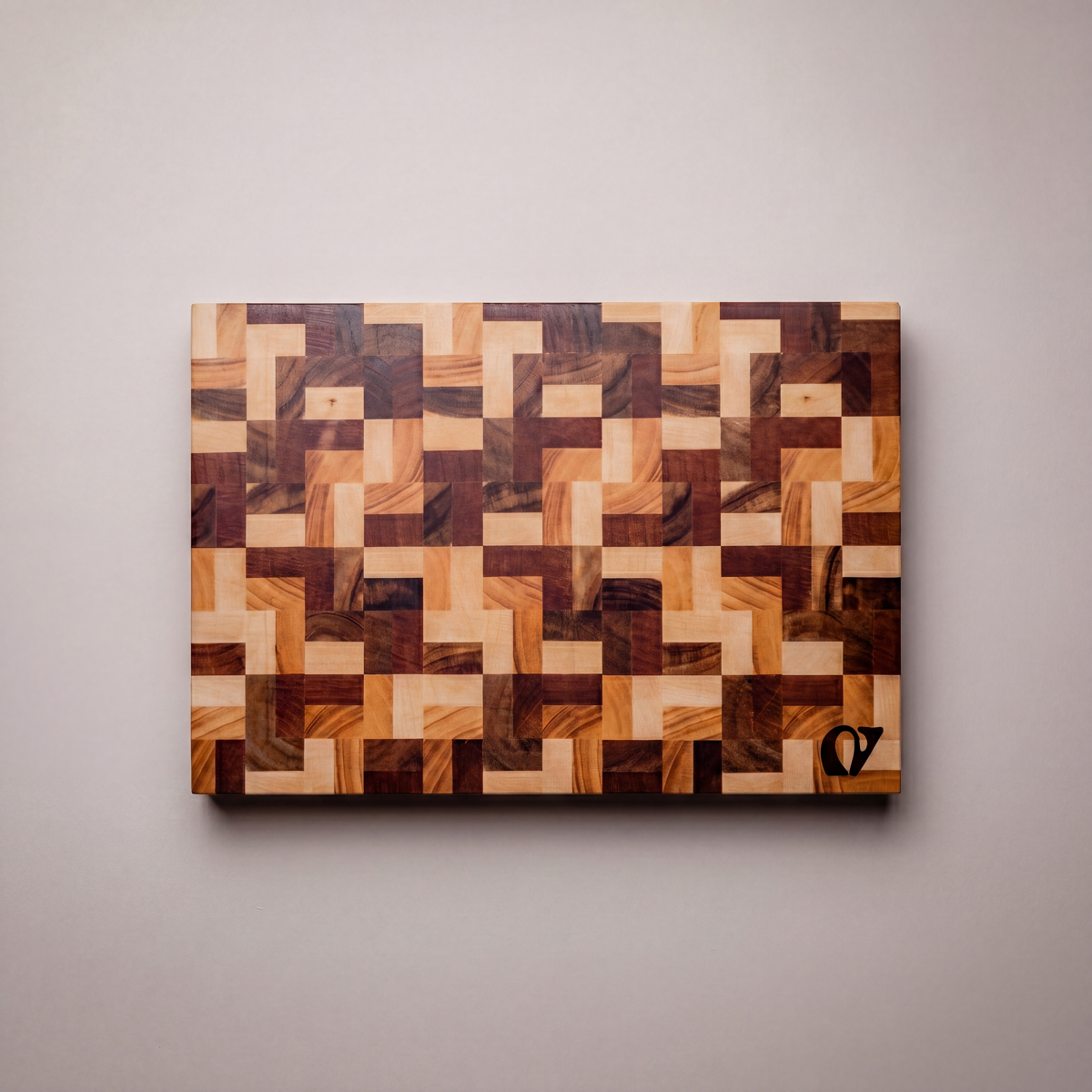
@notorious_foodie is the guy who actually asked which oak. He chops on camera for 20 million people, and when he set out to build his own board, that one question is where he started.
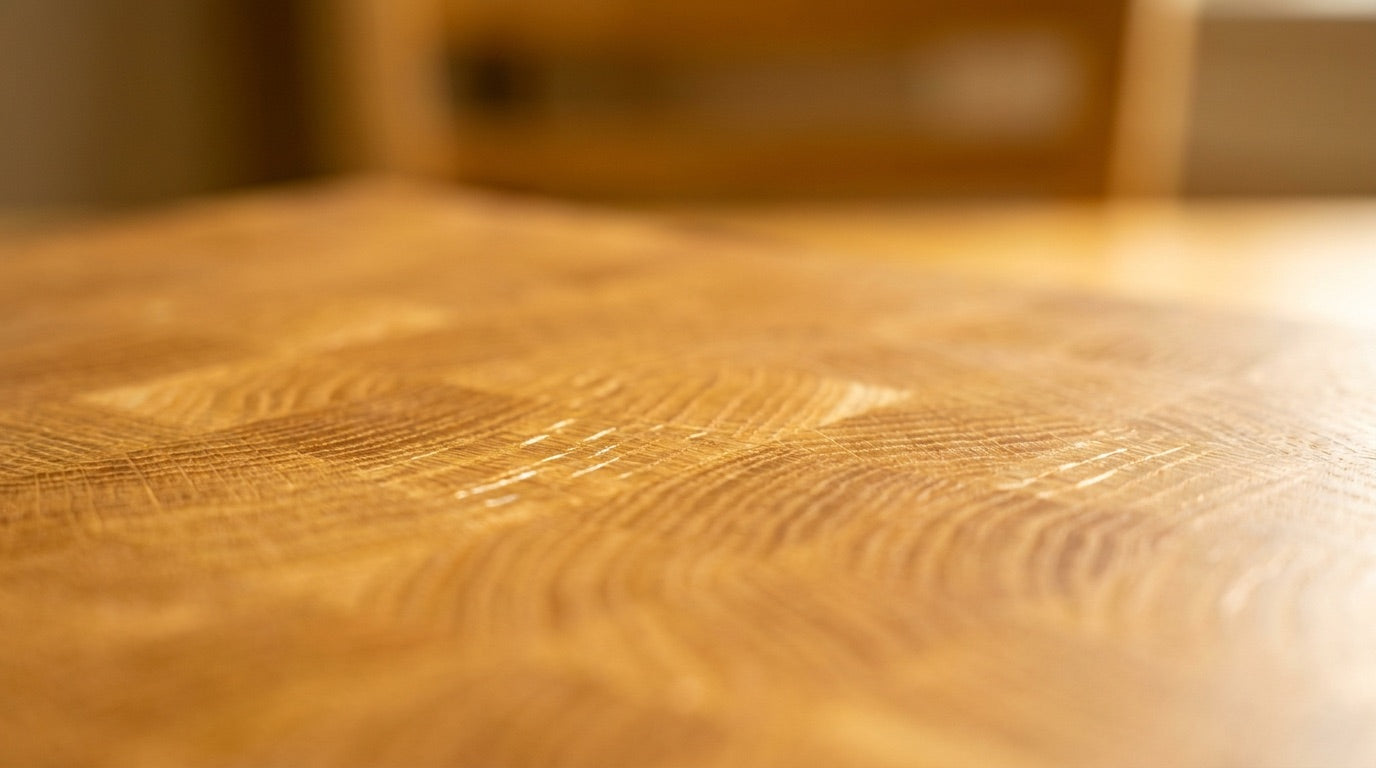
So the oak in a Notorious board is white oak, always, never red. Sealed pores, the same wood the barrel makers trust, so it fights off water instead of drinking it in.
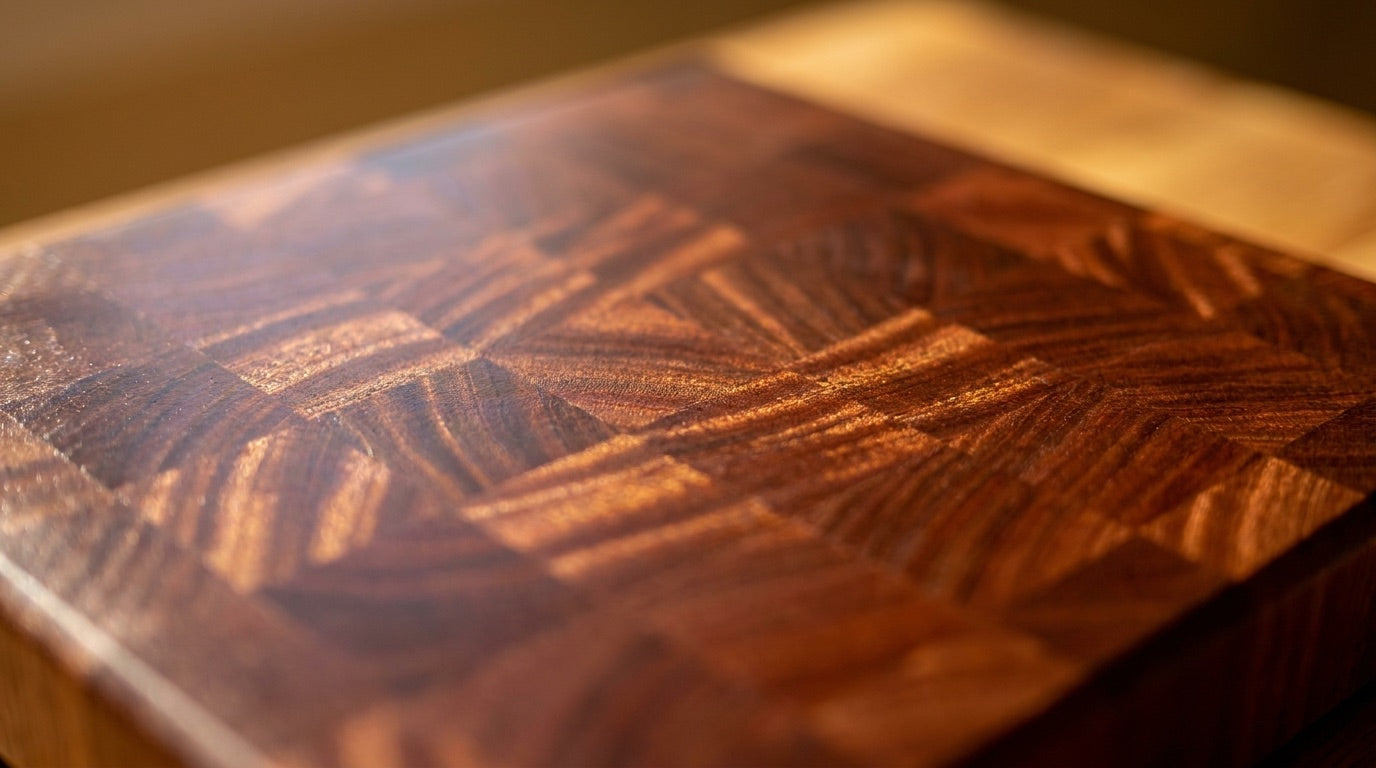
And it isn't alone, because the board is a checkerboard of four woods, each picked on the same standard: closed, tight grain that keeps juice and bacteria up on top where they wash away. There's maple, the butcher-block classic; acacia, so oil-rich that water beads and rolls off it; sapele, dense and dead-stable; and white oak, the honest oak.
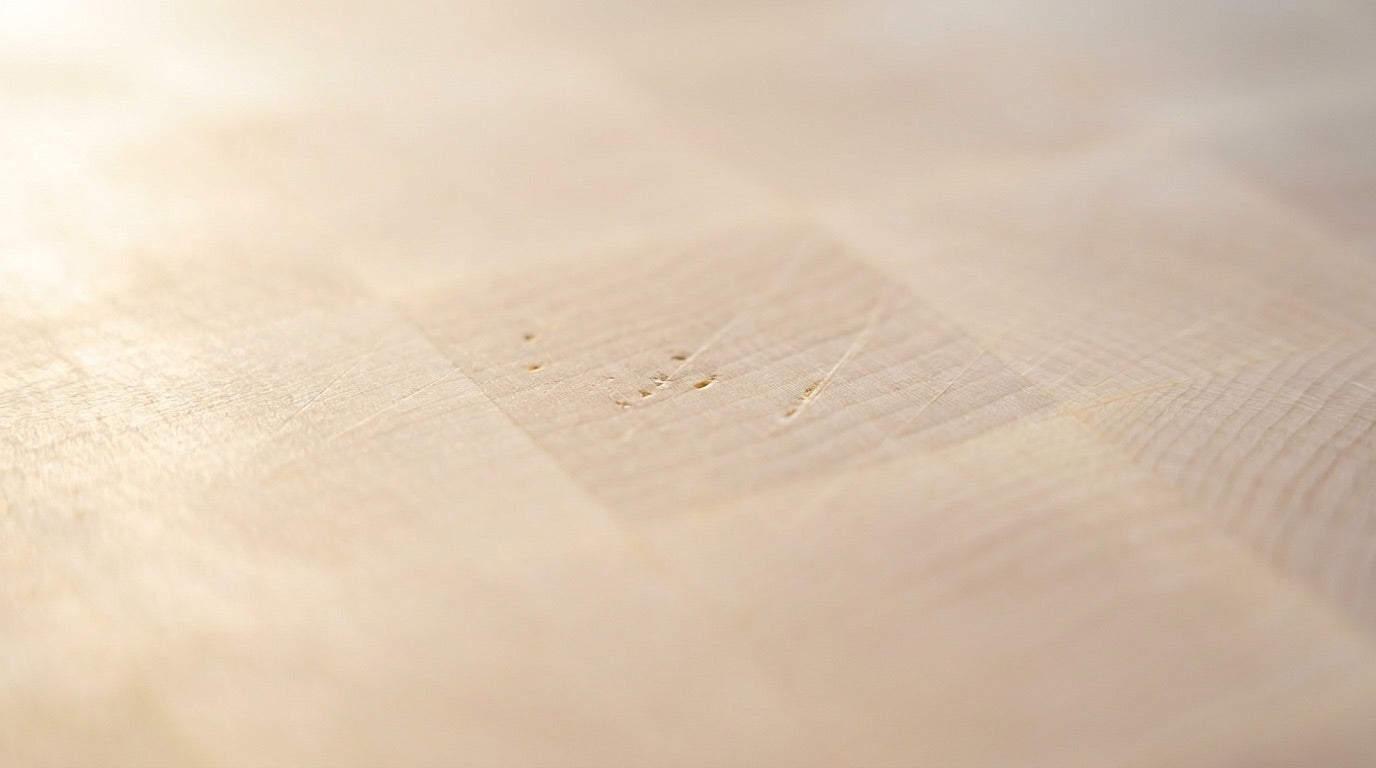 Maple
Maple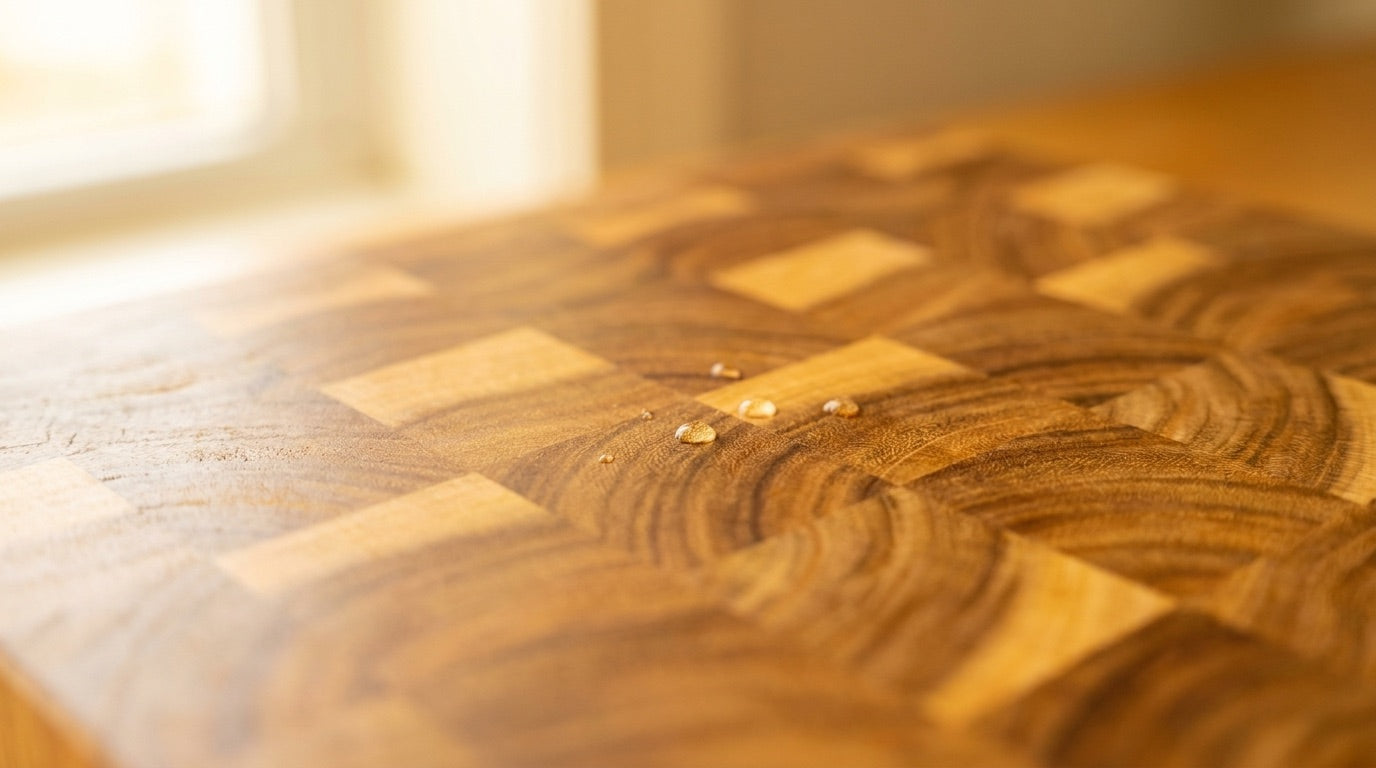 Acacia
 Sapele
 White Oak
They're cut end-up, the way butcher blocks have been made for a hundred years, so the surface takes a knife softly and closes back around the cut instead of scarring.
You already did the hard part when you left plastic behind. The last step is making sure the wood you replaced it with is the kind that holds nothing in, so run the 30-second test on the board you own tonight. And if you'd rather just start with a board built to pass it, this is the one @notorious_foodie built to do exactly that.
"I threw out every plastic board the week this came. I am not going back."
Priya S. ✓ Verified buyer"Two years in. Still dead flat. My knives have never stayed this sharp."
David R. ✓ Verified buyer"I've made it my default gift for weddings and housewarmings. People LOVE IT!"
Terri M. ✓ Verified buyerIt's called closed grain - and it's why a Notorious board shrugs off water, warping, and daily wear.
Red Oak looks almost identical on the shelf. Under a microscope it tells a very different story.
- Tyloses seal white oak's pores; red oak's are open (the straw/bubble test). The Wood Database
- Why white oak is used for barrels and boats and red oak is not (sealed vs. open pores). Fine Homebuilding
- Bacteria die off on wood surfaces but survive and multiply in plastic knife grooves. Ak, Cliver & Kaspar, J. Food Prot. 1994. doi.org/10.4315/0362-028X-57.1.16
Statements about wood properties reflect published woodworking and food-safety references linked above.