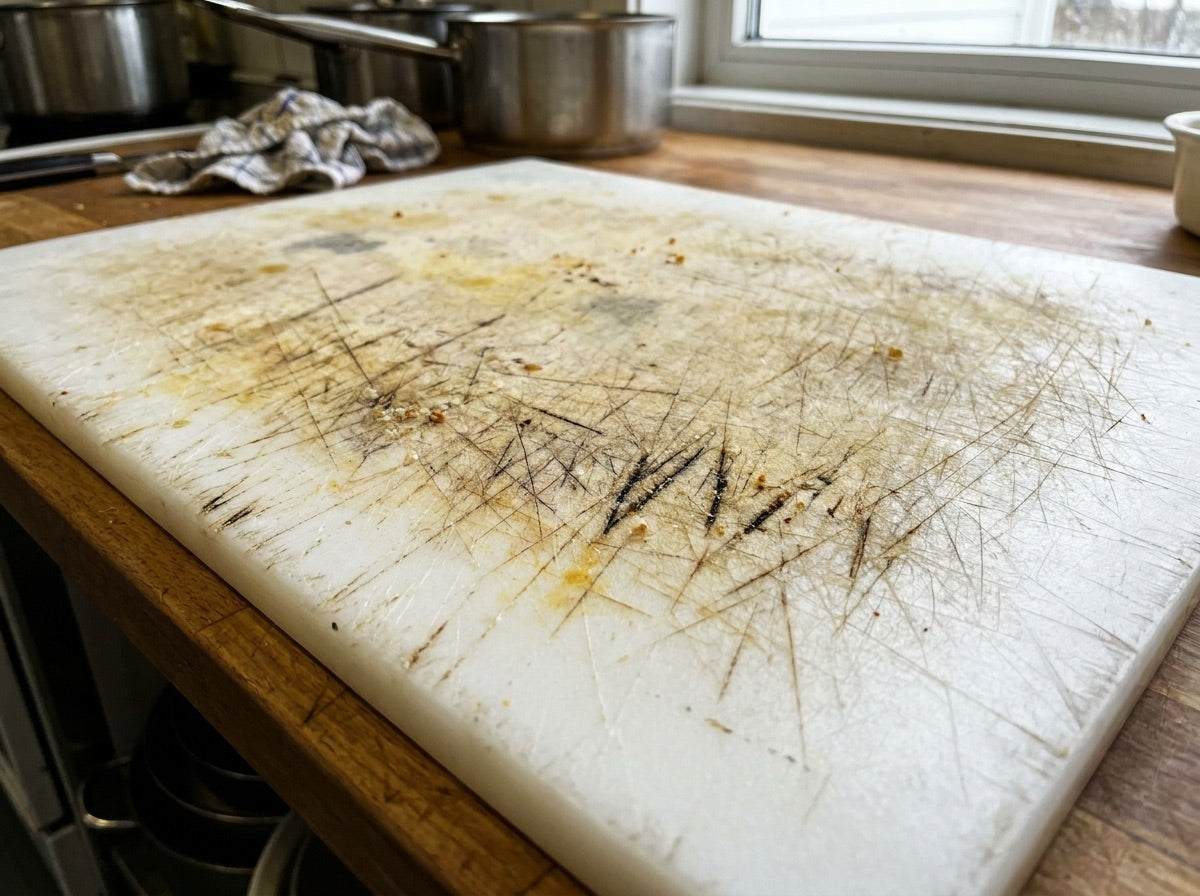
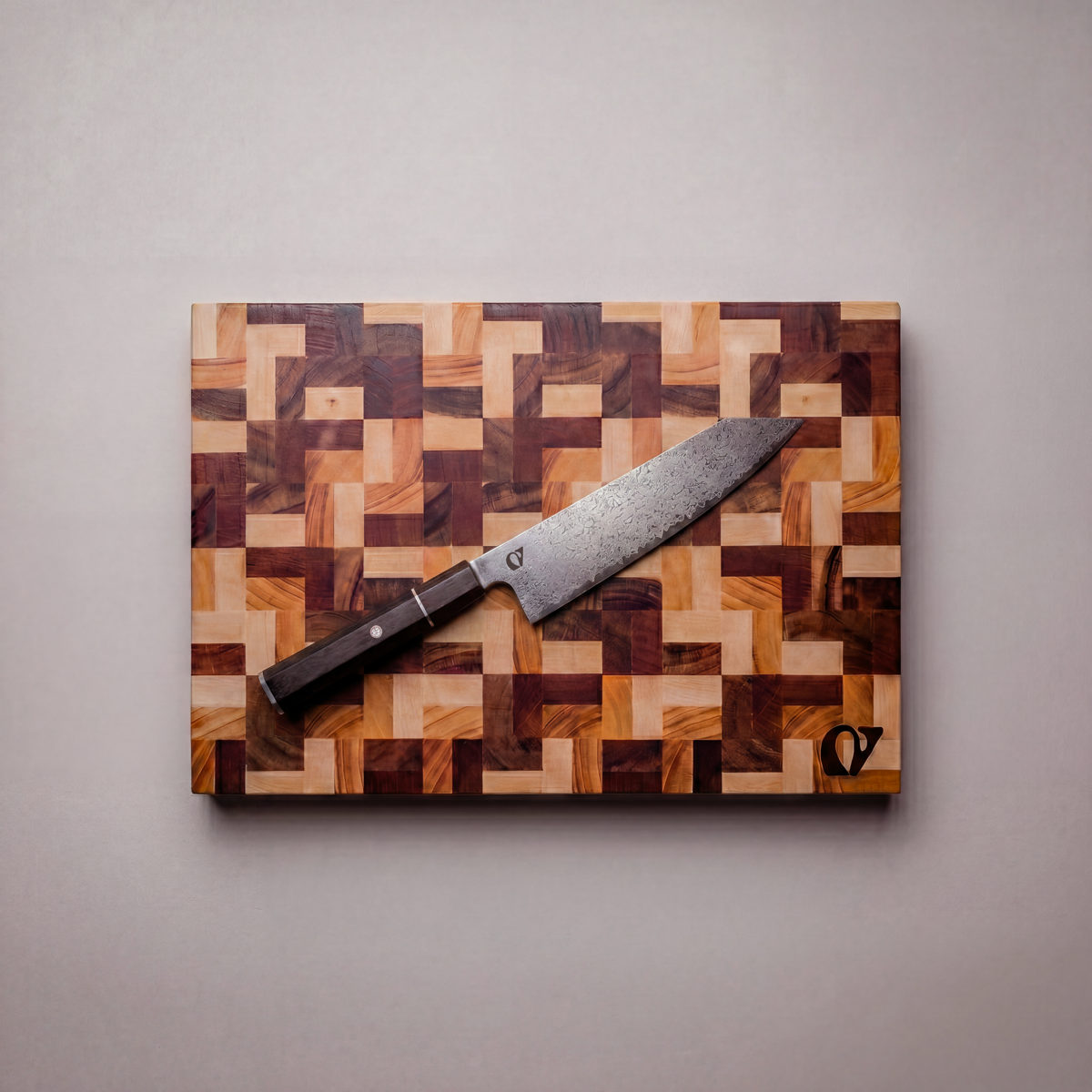
I KEPT BUYING OTHER CREATORS’ BOARDS AND KNIVES. THEY WERE RUBBISH.
Big name on the box. Big quote about craftsmanship. A knife that went dull in a month and a board that gouged in a week.
Because that’s all it was. A name on the box. Someone else made the thing. The creator just rented their face to it, cashed the cheque and never had to cook on it.
I fell for it more than once. That’s the honest part.
“When I say I set the spec on this one myself, I mean it.”
There’s no factory behind me that built a board and then went looking for a face.
You’re not paying for the wood. You’re paying for the photography.
Once you know what to look for, the gap is almost funny. A board’s job is decided by three things: how hard the wood is, whether the grain is open or closed, and which way it’s cut.
Almost nobody selling to you mentions any of them.
THEN I FOUND OUT WHAT MY BOARD WAS DOING TO MY FOOD.
I’d been careful about washing for years. The problem was never only how I cleaned. It was what I was cleaning.
In 2023, researchers at North Dakota State chopped on plastic boards and measured particles released during cutting. Older UC Davis work compared bacterial recovery from wood and plastic cutting surfaces.
And switching to just any wood wasn’t the fix either. Too soft and it gouges. Too hard and it punishes your edge.