The 5 Things Your Cutting Board Is Hiding From You
You use it more than almost anything else in your kitchen. You've probably never given it a second thought. Here's what it's been doing while you weren't looking.
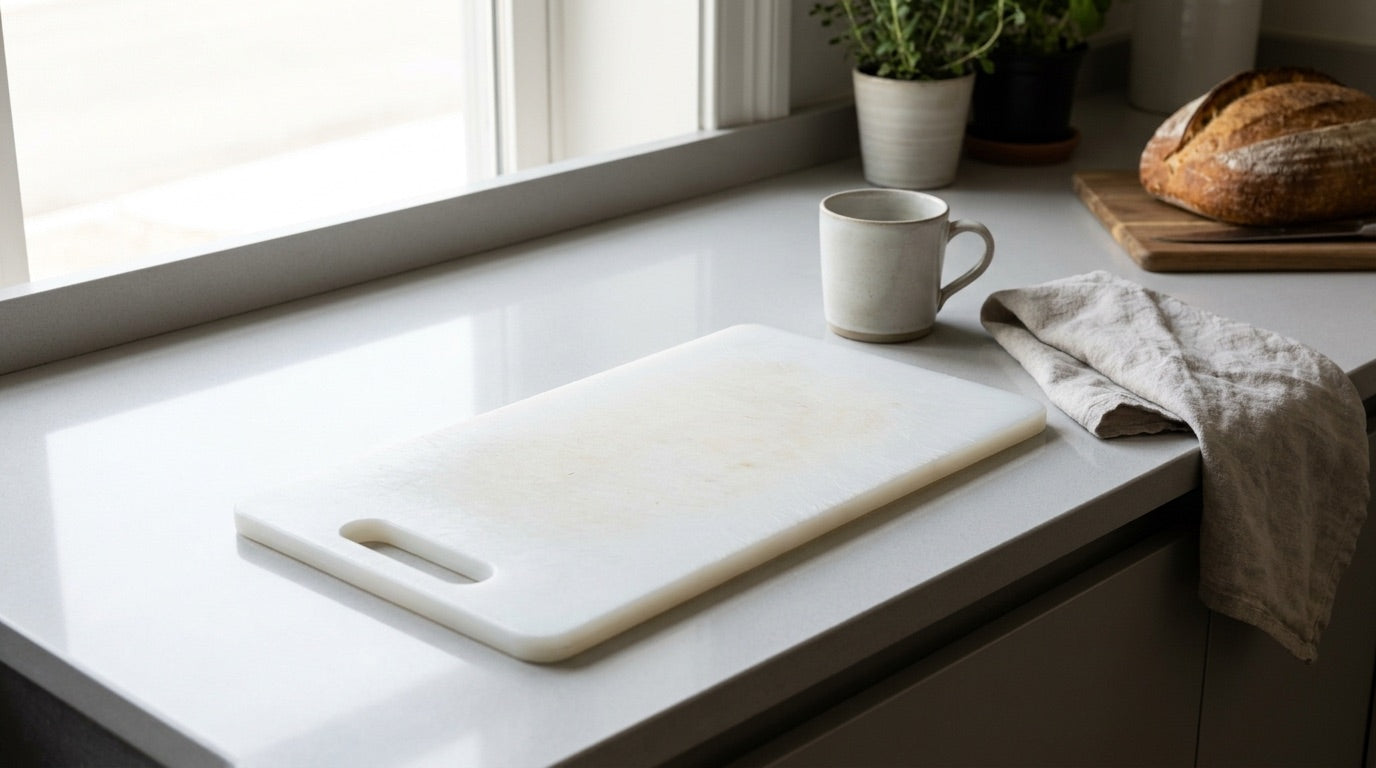
Your cutting board touches almost everything you eat. Yet most of us grab whatever is cheap, use it for years, and never ask what it's made of.
That turns out to be a mistake.
None of the five things below is an opinion. Each one is something scientists or woodworkers have actually shown. And once you've seen them, you'll never look at that slab on your counter the same way.
If it's plastic, a little of it is ending up in your food
Start with the one most people have never heard.
In 2023, food scientists at North Dakota State University chopped food on ordinary plastic boards. Then they measured what came off.
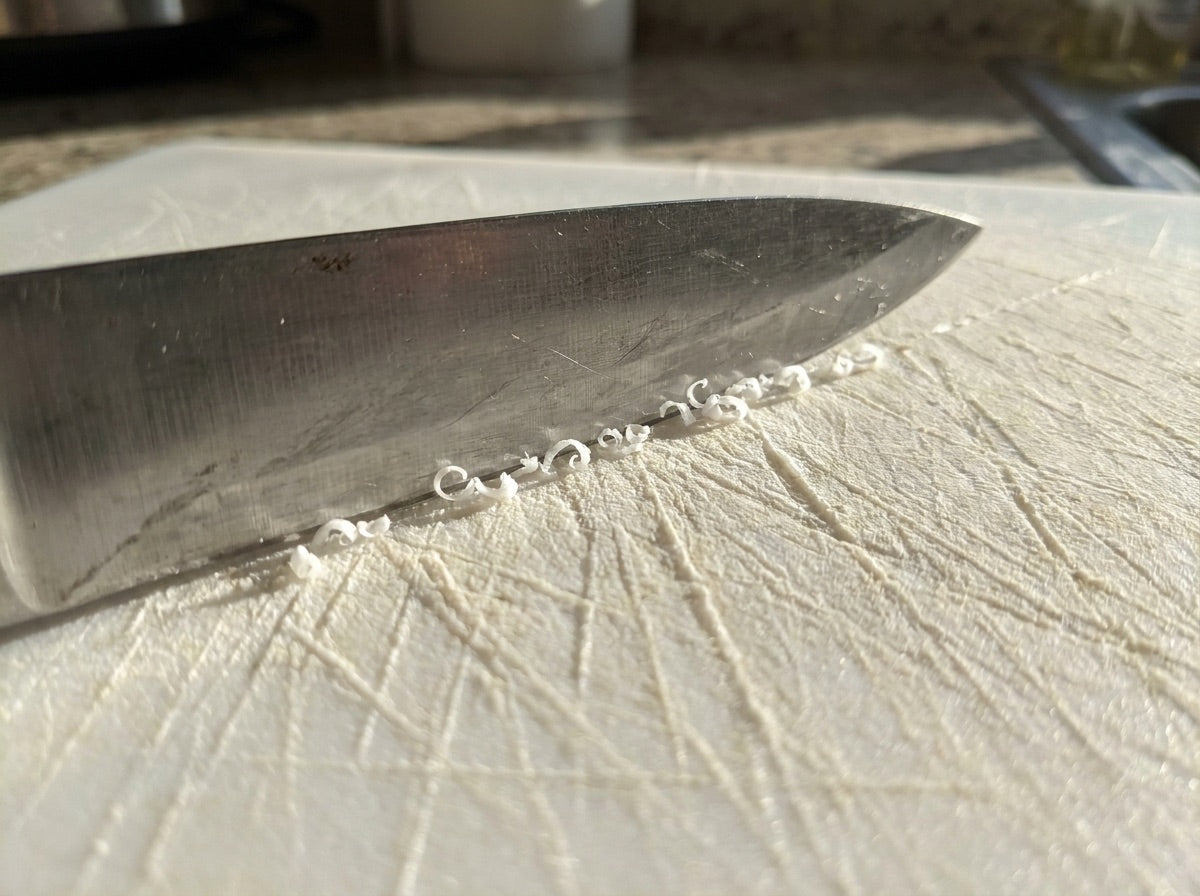
The board was shedding tiny flecks of plastic. Straight into the food, as you cut. A single board can shed a surprising amount over its life.
You can't see it. You can't taste it. That's exactly why it never crosses your mind.
To be fair, scientists are still studying what all that plastic does inside the body. Nobody can claim to know the full answer yet.
Even so, most people feel the same way once they hear it. They'd rather their dinner didn't come with a side of their cutting board.
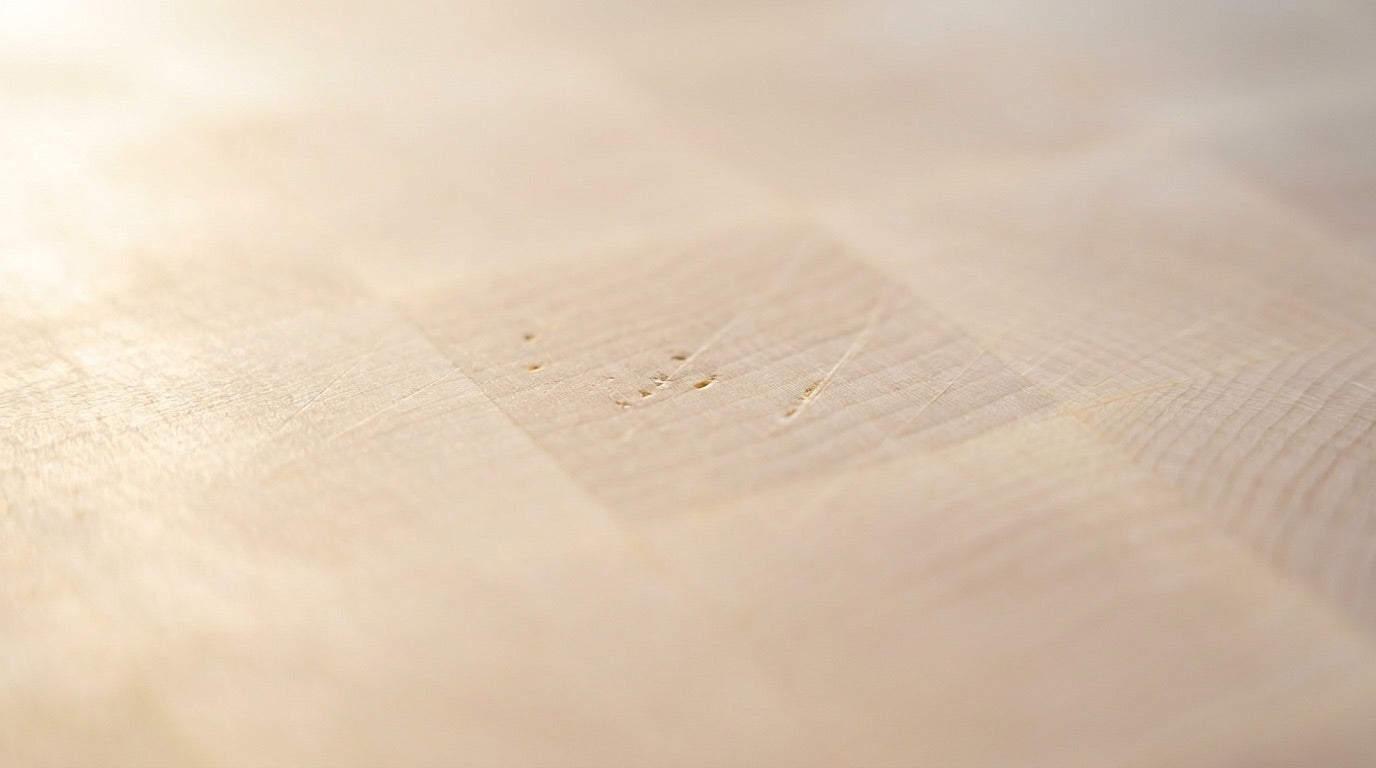
And the proof is right in front of you. Look closely at your plastic board. See all those tiny cuts? Each one is holding flecks of plastic, ready to end up in your next meal.
Every knife cut is a gap you can't clean into, only over
A plastic board never truly comes clean. Here's why.
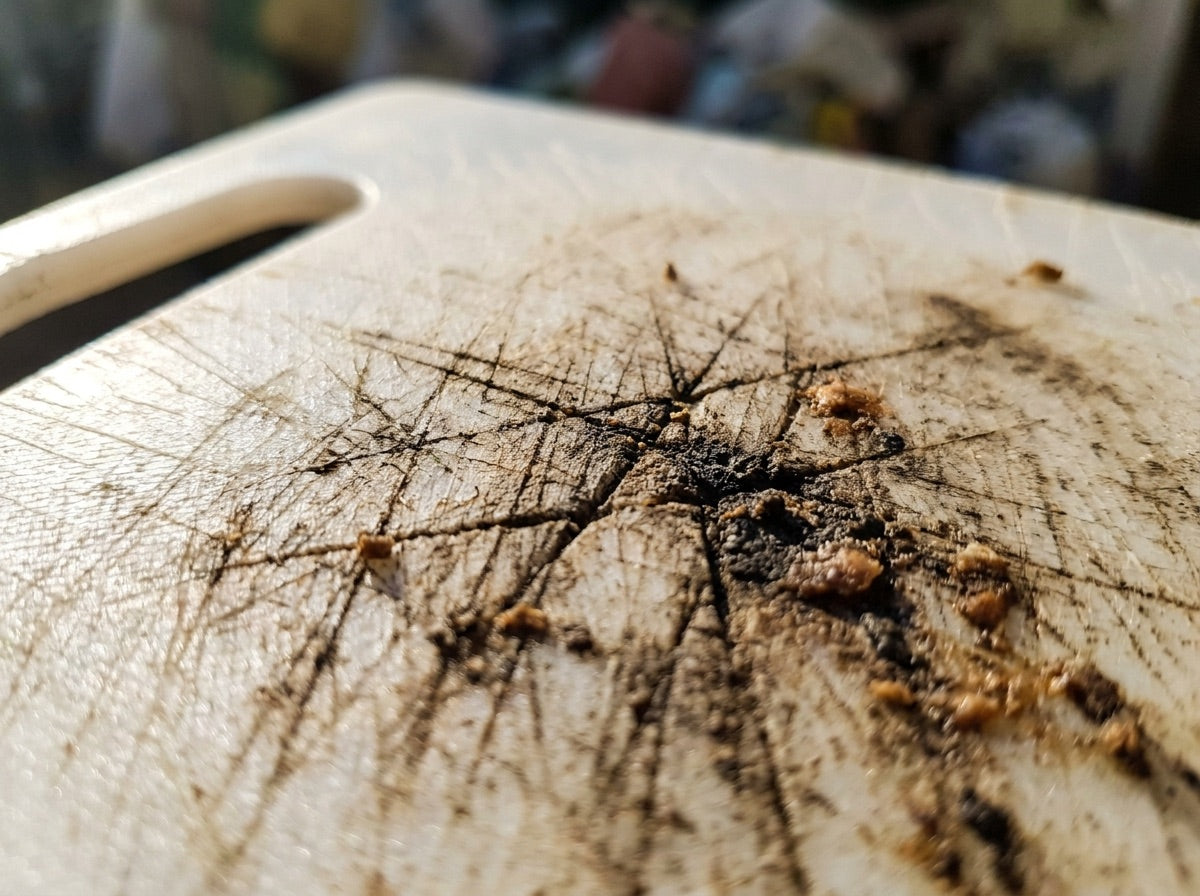
Every time your knife lands, it opens a thin cut in the surface. Do that a few thousand times and the whole board becomes a field of tiny grooves.
Some of the plastic shaves off into your food. And each groove turns into a place for bacteria to settle, down below where your sponge can reach.
When you wash a scarred plastic board, you aren't cleaning the cuts. You're cleaning over them.
Wood does the one thing plastic can't: it kills what lands on it
This is the part that surprised even the researchers.
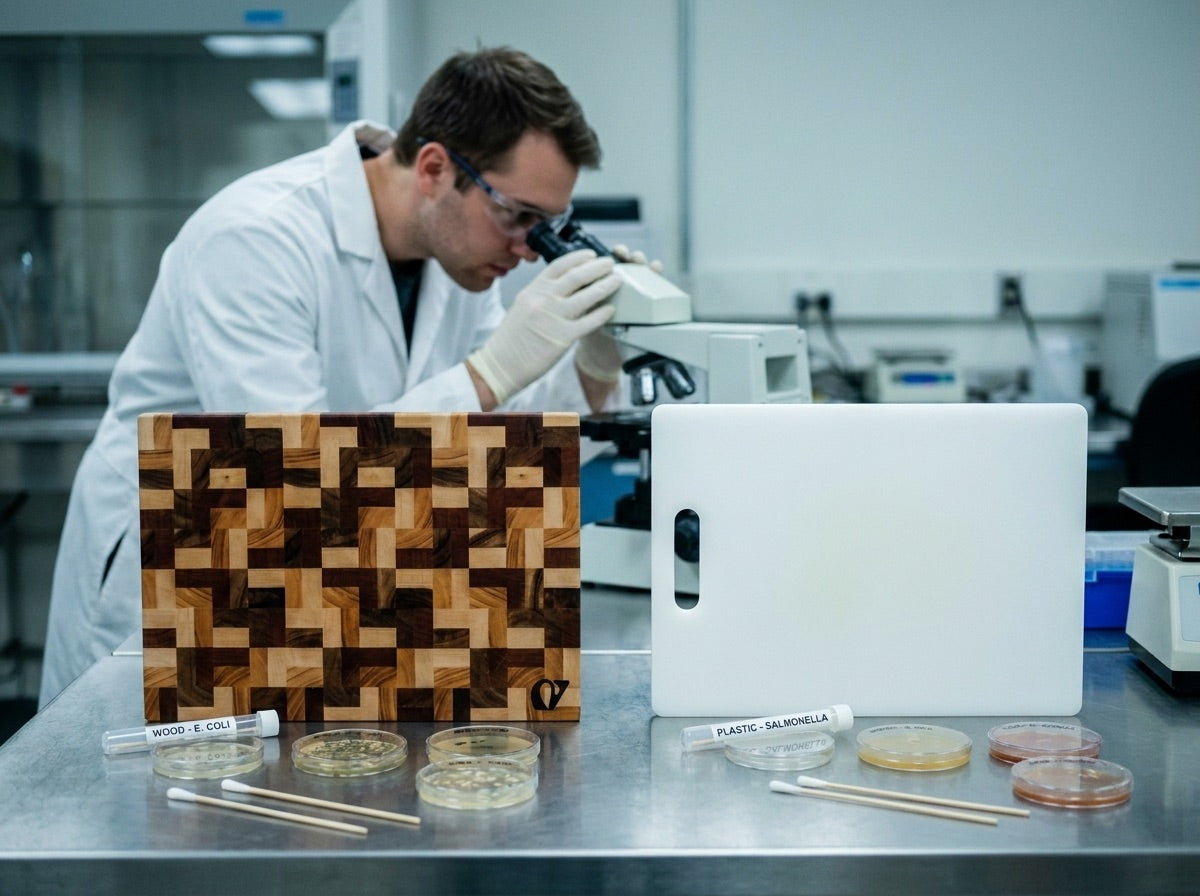
For years we were told plastic was the clean choice. So food-safety scientists (Dean Cliver's lab) put the same bacteria on plastic and wooden boards to prove it.
They found the opposite.
On the plastic, the bacteria lived in the knife cuts. On a scarred board, they were nearly impossible to scrub out.
On the wood, the bacteria were pulled down into the surface and died off there.
So the thing that made plastic feel modern, that hard sealed surface, is exactly what turns into a trap once your knife scars it. Meanwhile the material everyone called old-fashioned quietly cleans up after itself.
If you already switched to wood, it might be the wrong wood
So you swap to wood and you're done, right?
Not quite. This is where even careful shoppers get caught.
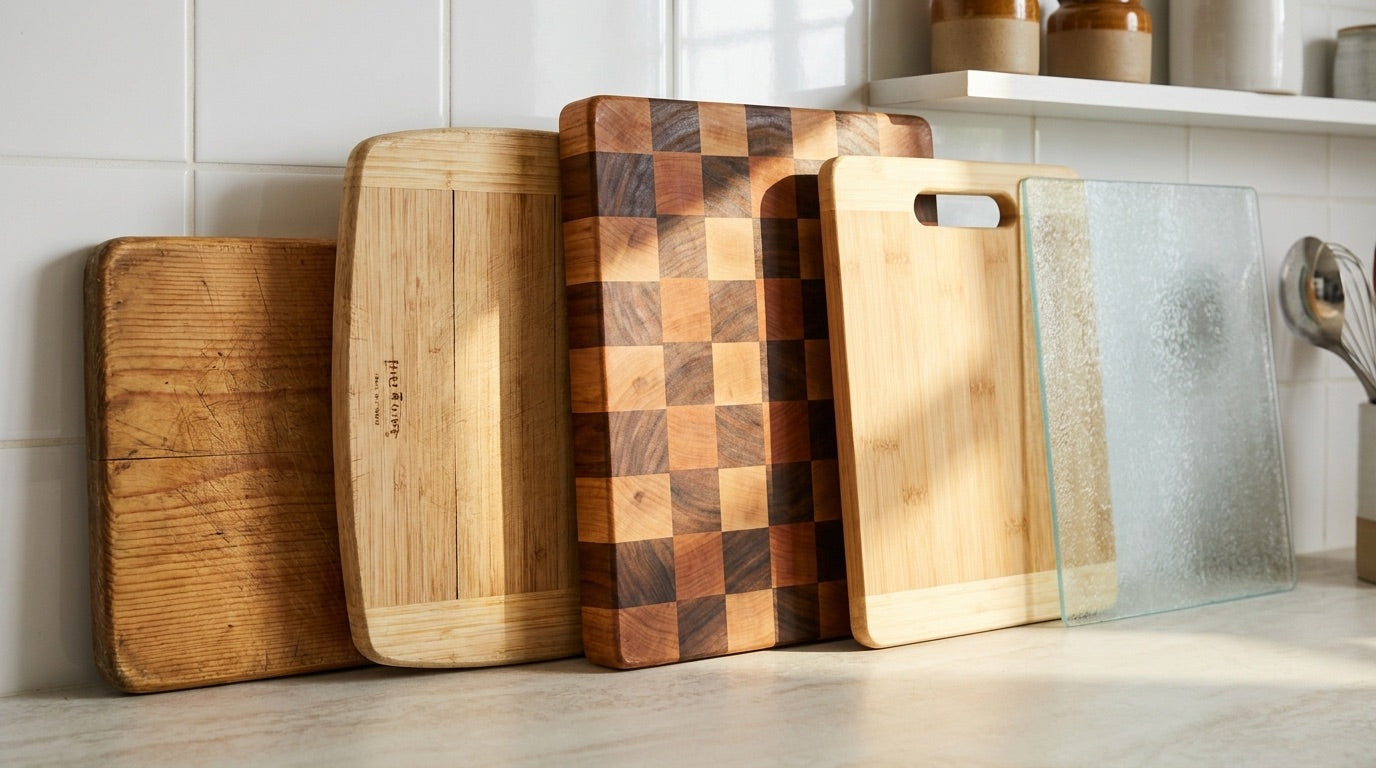
Wood only works as a cutting surface inside a narrow window:
- Too soft, and it gouges almost as fast as plastic.
- Too hard, like glass or bamboo, and it grinds down your knife's edge.
- Too open and thirsty, and it soaks up juice and warps.
The reason most people think wood boards are fussy or fragile is simple. They bought a board outside that window.
The boards that last for decades sit right in the middle of it. Hard enough that a knife won't scar them. Kind enough that they won't dull your blade. Closed-grain enough that liquid stays up on top, where you wash it off.
It isn't a matter of taste. It's closer to a spec.
Two boards can both say "oak," and only one belongs in a kitchen
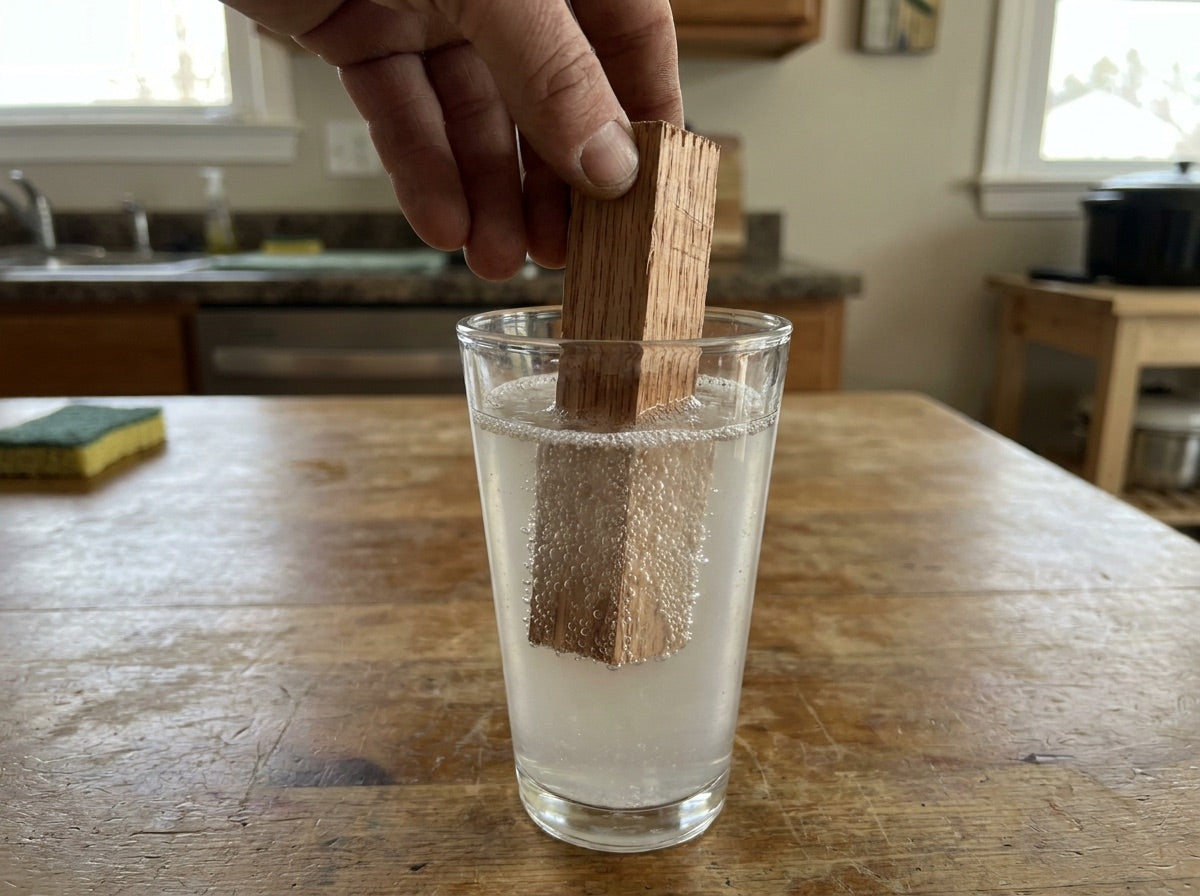
Here's the last thing your board won't tell you. And it's the one you can test yourself.
There are two common oaks. They behave completely differently.
Red oak is full of open pores that run right through it. So much so that you can stand a piece in soapy water, blow through the other end, and watch bubbles rise up through the wood.
White oak's pores are sealed shut by nature. Nothing passes through at all.
That's not a small detail. It's why every wine barrel is white oak, never red. Fill a red oak barrel and it leaks straight through the wood.
A board with open pores does the same thing on your counter. It wicks juice and bacteria down inside, where you can't reach.
Yet most listings just say "oak." So before you trust any wooden board, ask one question: which oak is this?
If they won't say, you already know enough.
What a board that hides nothing looks like
Put the five together and they describe one single surface:
Very few boards check every box. That's the whole reason this list is worth knowing before you buy your next one. You can use it to vet any board you're considering. Most people will.
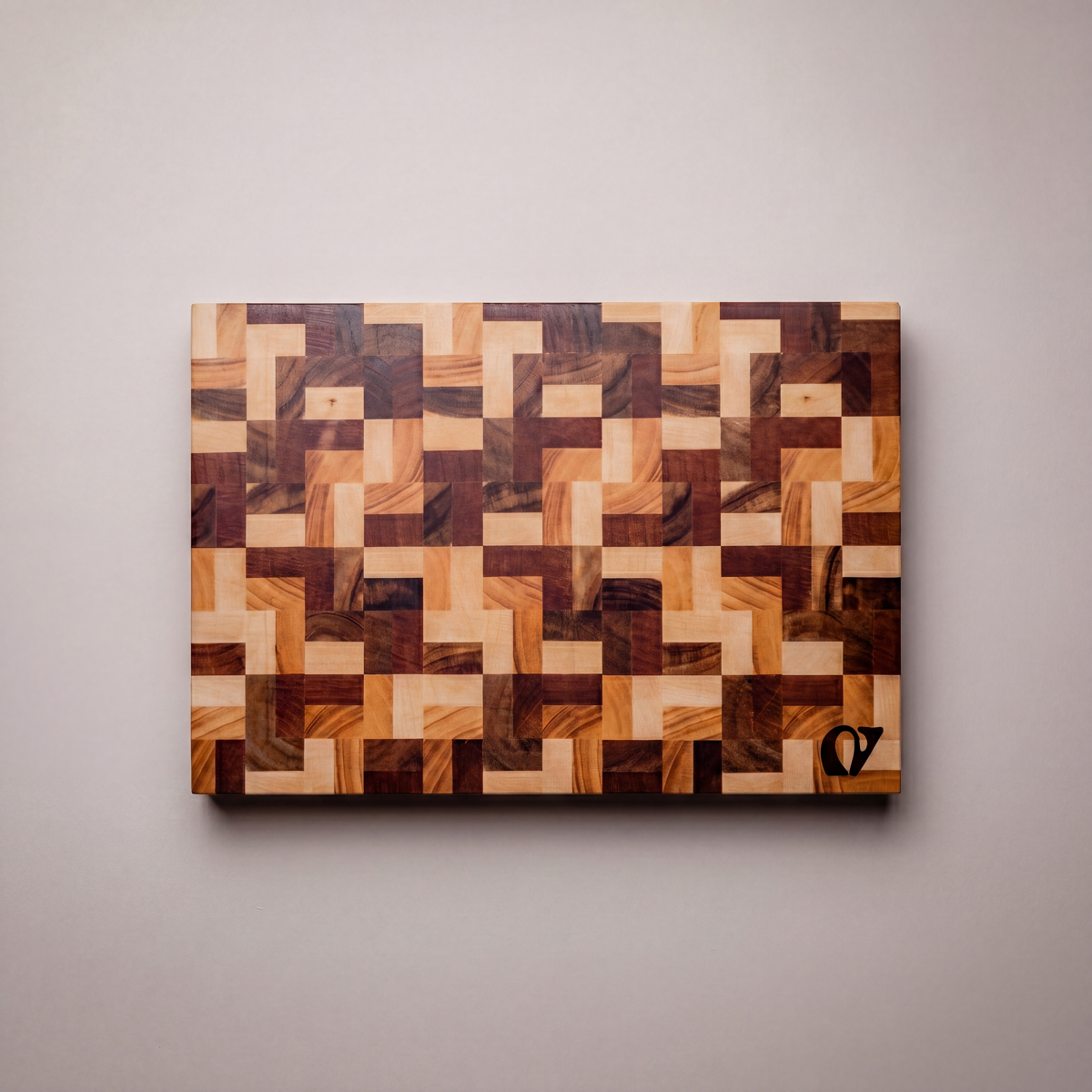
But if you'd rather not hunt, here's one worth knowing about. @notorious_foodie, the cook 20 million people watch prep every day, built his board to pass all five on purpose. Four sweet-spot woods. White oak, never red. Cut end-up, the way butcher blocks have been made for a hundred years.
 Maple
Maple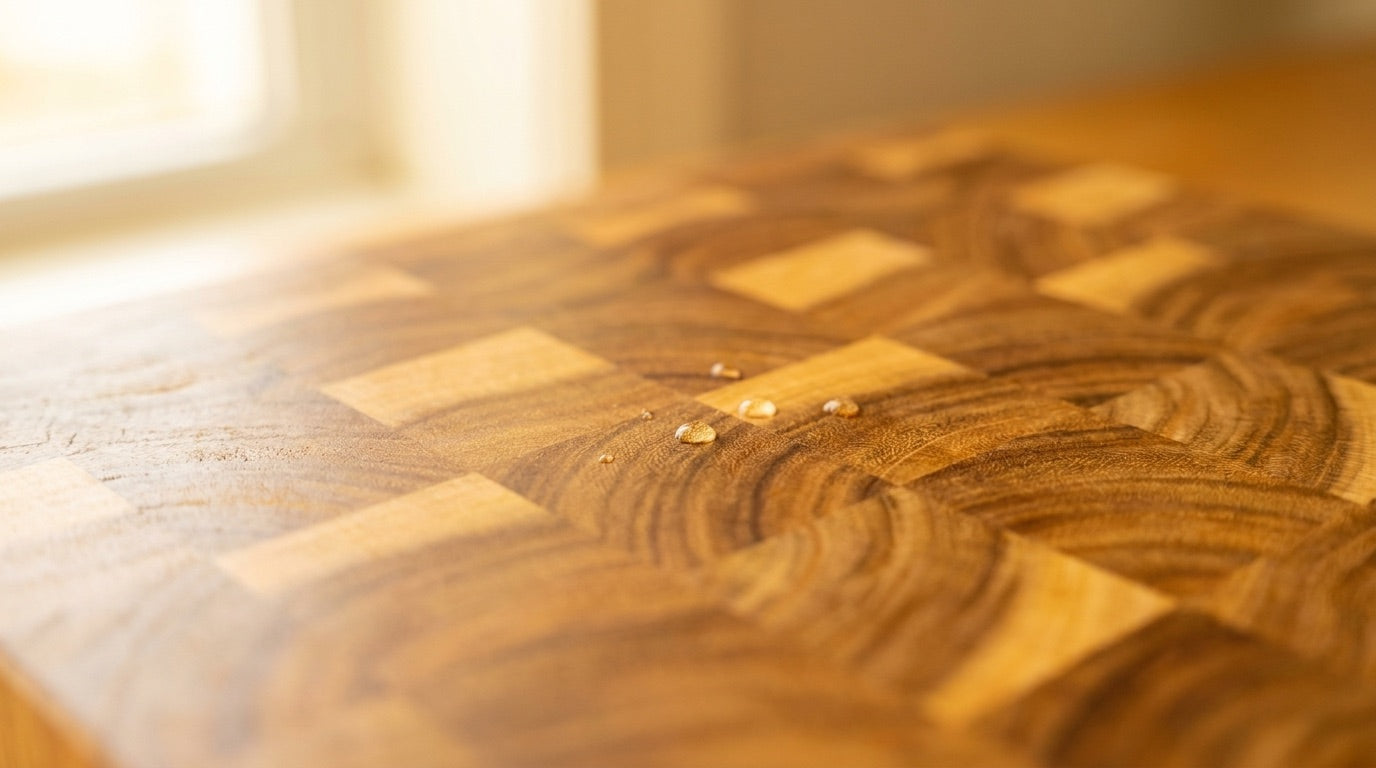 Acacia
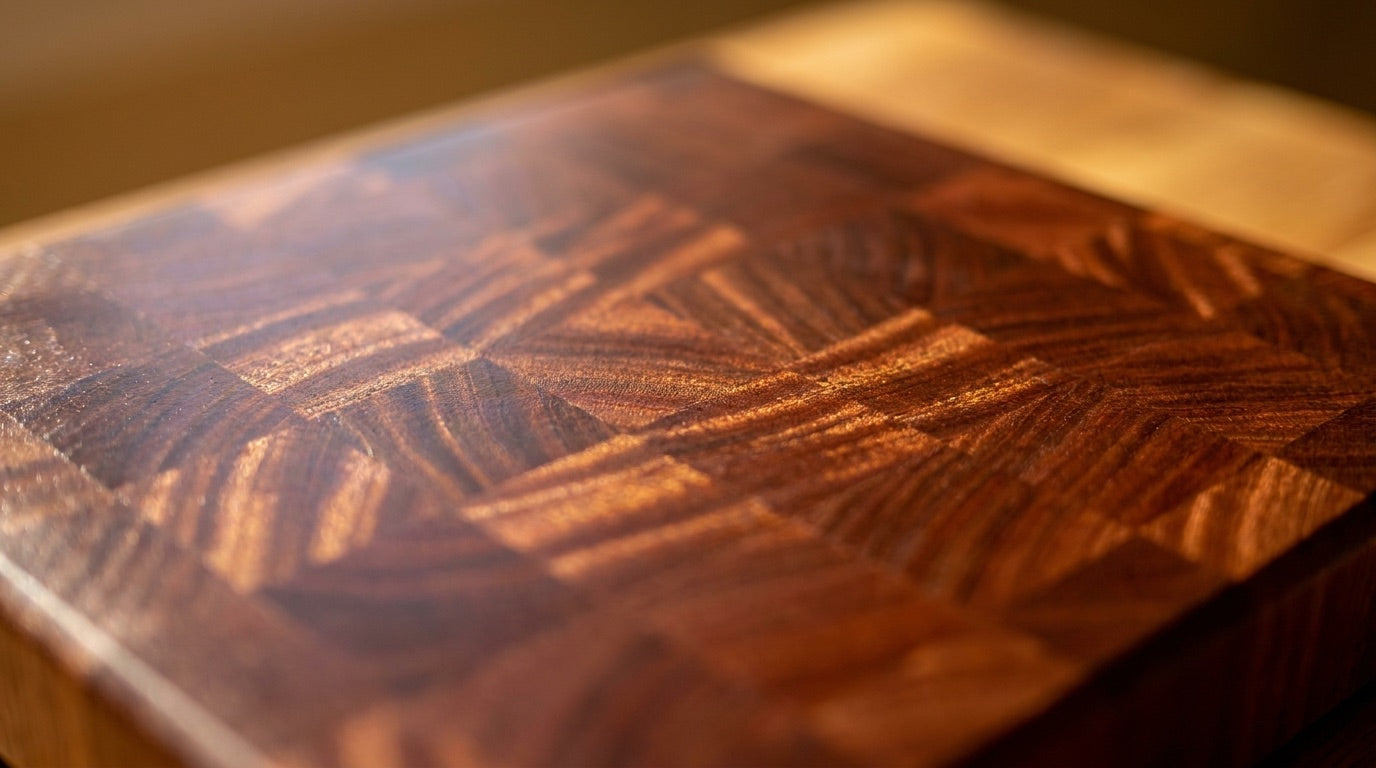 Sapele
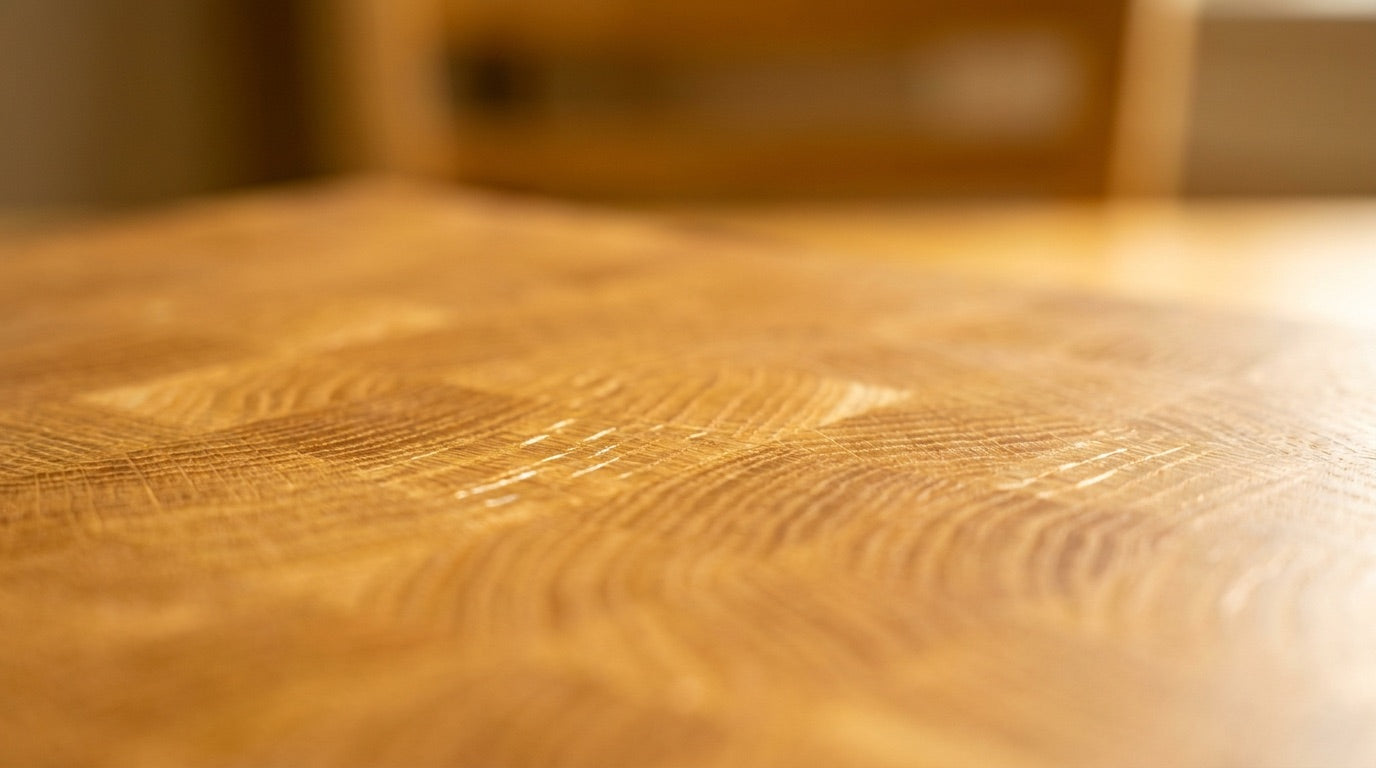 White Oak
- Plastic boards shed microplastics into food when cut. Yadav et al., Environ. Sci. Technol. 57(22), 2023. doi.org/10.1021/acs.est.3c00924
- Board plastic linked toward retail meat. Habib et al., Food Addit. Contam. A, 2022. doi.org/10.1080/19440049.2021.2017002
- Microplastics in chicken and fish linked to plastic boards. Habib et al., IJERPH, 2022. doi.org/10.3390/ijerph192013442
- Bacteria die off on wood, survive in plastic knife grooves. Ak, Cliver & Kaspar, J. Food Prot., 1994. doi.org/10.4315/0362-028X-57.1.16
- Tyloses seal white oak's pores; red oak's are open (the straw/bubble test). The Wood Database
This article is sponsored content produced in partnership with Notorious Cookware. Statements reflect what the linked studies and references measured and found; research on the health effects of ingested microplastics is ongoing.